
Silence of the Walls: When a Face Becomes a Landscape of Memory
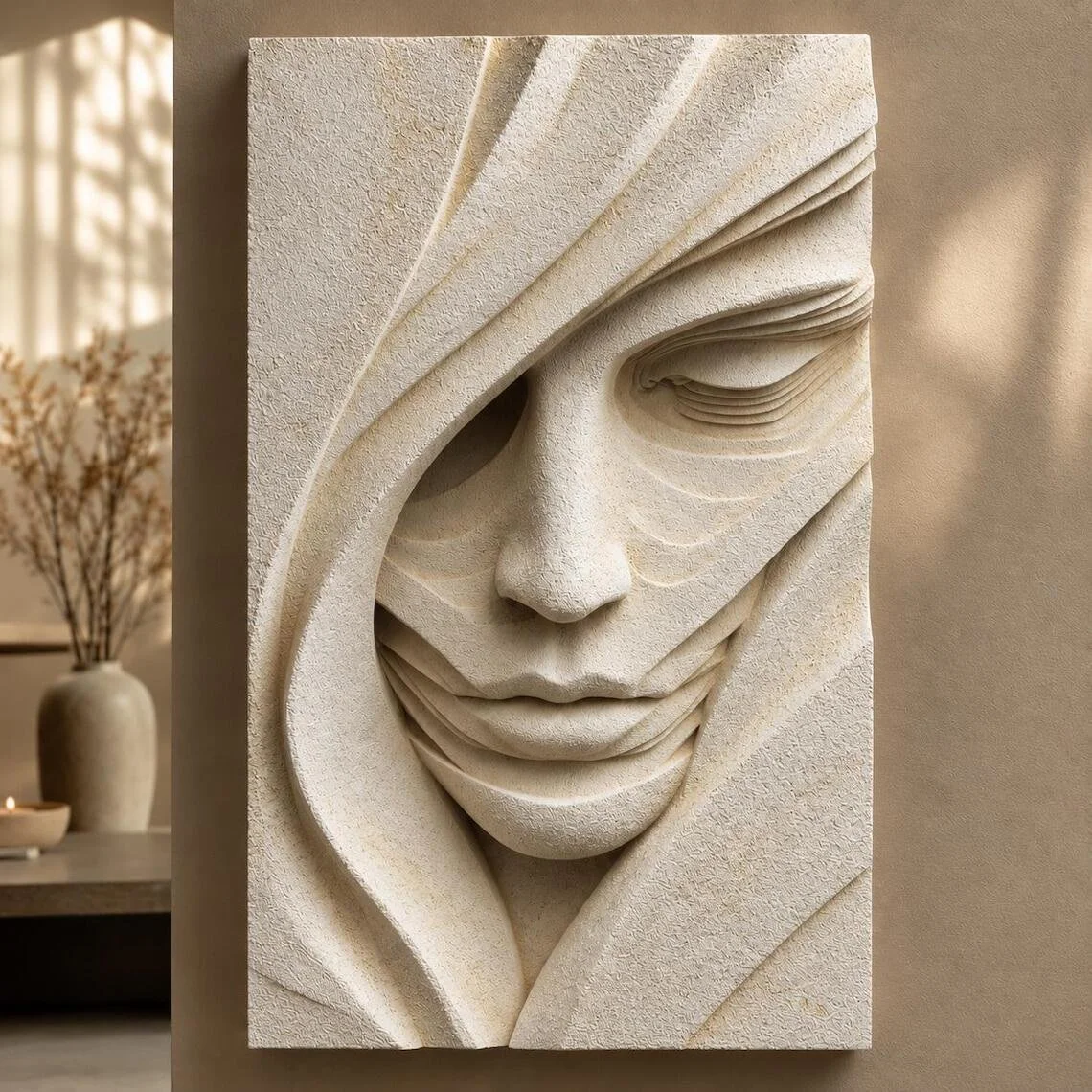
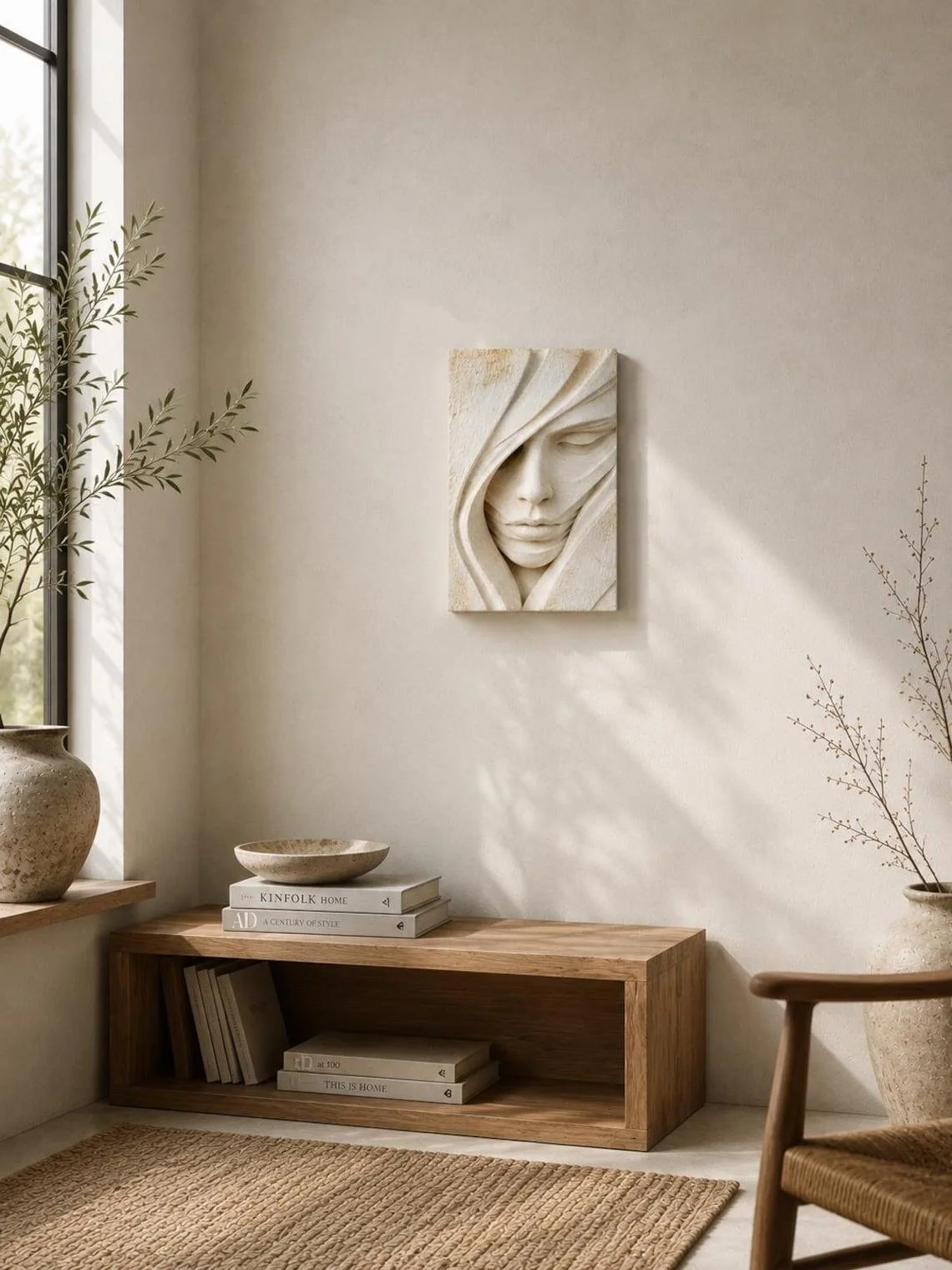
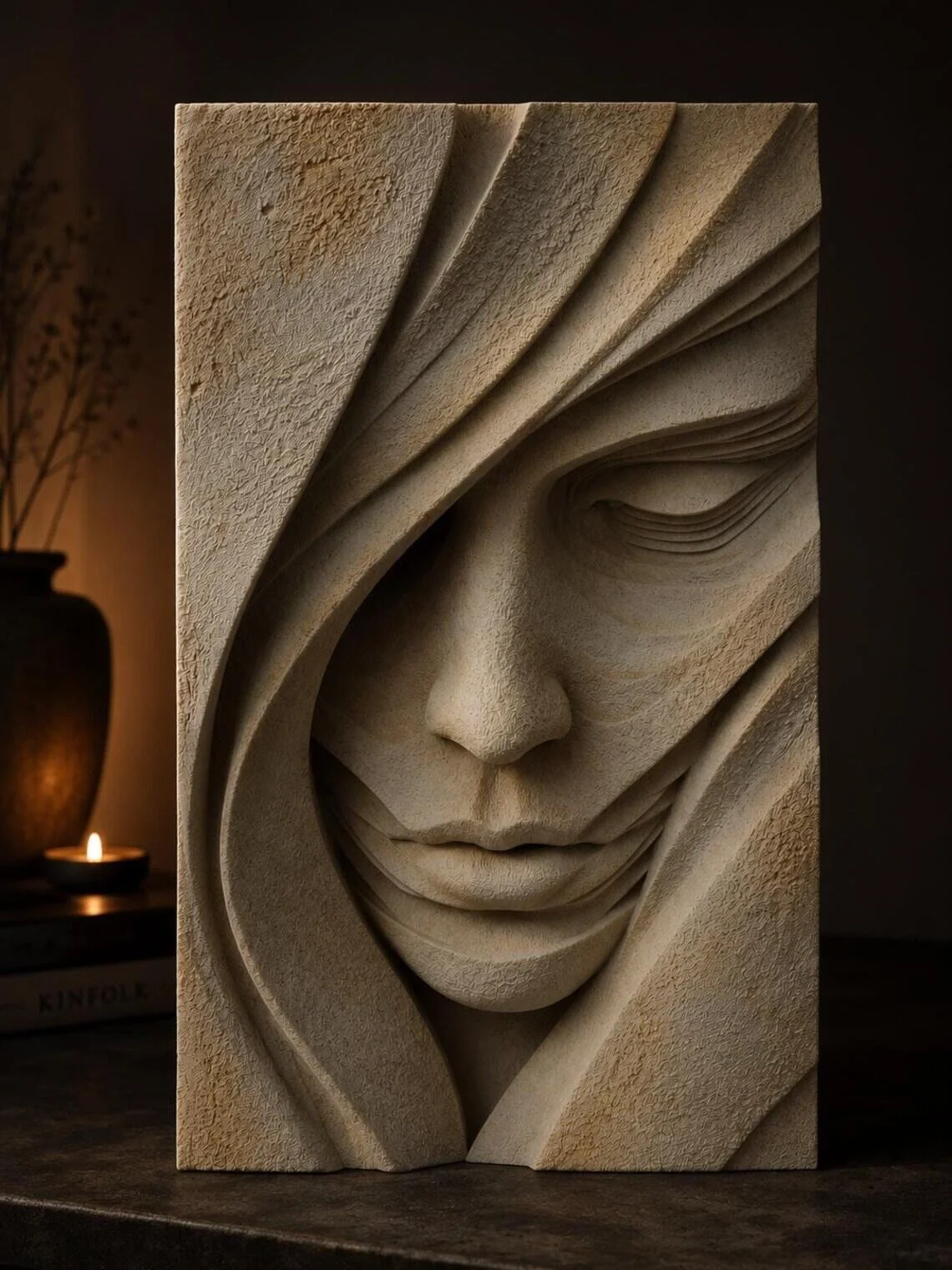
There are wall artworks that decorate a room, and there are pieces that quietly change the way a wall is experienced. Silence of the Walls, Archaeology of the Self belongs to the latter category. Rather than relying on color or ornament, the sculpture creates its presence through a human face, layered relief, and an intentionally restrained palette.
The work is presented by UNIQSYS as an original artwork by Felicita. Its design centers on a stylized face emerging from a series of flowing, sculpted forms, creating an object that sits somewhere between portraiture, relief sculpture, and contemporary wall decor.
At first glance, the piece feels quiet. The longer it is viewed, however, the more visual information begins to appear in its surface.
What Makes This Piece Stand Out?
The strongest element is the relationship between the recognizable face and the layers that partially obscure it.
The Etsy listing describes the sculpture as an exploration of identity, memory, and the experiences accumulated throughout life. The flowing forms across the face are presented as visual traces of those experiences, rather than simply decorative marks.
Visually, that idea works because the face is neither completely exposed nor completely concealed. The relief creates a sense of interruption: parts of the facial structure remain legible while other areas disappear beneath sweeping, fabric-like or wave-like forms.
That tension gives the sculpture more depth than a conventional flat portrait. Depending on the lighting and viewing angle, the raised surfaces create shadows that emphasize the contours and make the piece feel almost architectural.
The neutral coloration is equally important. The listing identifies the finish as a white textured, stone-like surface, while the product images show a soft off-white to beige appearance. This restrained palette places the emphasis on form, texture, and shadow rather than color contrast.
In a room filled with patterned textiles or colorful artwork, that restraint can provide visual balance. In a minimalist interior, it can function as the main point of interest without overwhelming the space.
Material and Craftsmanship
According to the product listing, the sculpture is made from bio resin and clay and finished with a textured, stone-like appearance. It is individually handcrafted, and the seller notes that subtle variations in texture and finish are intentional.
That detail matters because the surface is one of the artwork's defining features. Rather than behaving like a perfectly uniform manufactured object, the piece is intended to retain small differences from one sculpture to another.
The artwork is also made to order, with a stated production time of 7–10 business days. It is described as ready to hang and is carefully packaged for international shipping.
The available sizes include 25 cm, 30 cm, and 40 cm, with custom sizes available on request. This gives the piece some flexibility depending on whether it is being used as a quiet accent or as a more prominent focal point.
How It Works With Different Interior Styles
This sculpture has a contemporary character, but its neutral material language allows it to move comfortably between several interior styles.
Contemporary Interiors
A contemporary room with clean architectural lines is one of the most natural settings for the piece. Its sculptural quality introduces dimension without requiring strong colors or elaborate framing. Place it against a calm wall and allow the relief itself to provide the visual variation.
Minimalist Spaces
Minimalist interiors often depend on texture to prevent neutral rooms from becoming visually flat. Here, the sculpture can supply exactly that missing layer. White, warm gray, cream, taupe, and soft beige surroundings would allow its contours and shadows to remain the focus.
Organic Modern
The earthy appearance of the finish makes the sculpture particularly interesting alongside natural materials such as wood, linen, stone, and woven textiles. In an organic modern setting, it could soften a room dominated by harder architectural surfaces.
Japandi
The restrained palette and emphasis on quiet form also lend themselves to a Japandi-inspired interior. Rather than competing with the simplicity of the room, the sculpture can introduce character through subtle texture and an almost meditative visual presence.
Modern Rustic
Against plaster walls, warm timber, aged finishes, or other tactile materials, the relief could create an appealing contrast between contemporary sculpture and more rustic surroundings.
It is less about matching a single design trend and more about sharing a common visual language: simplicity, texture, and controlled color.
Where Could You Display It?
Because this is a wall sculpture rather than a traditional framed print, placement deserves some thought.
Living Room
The living room is probably the most natural location if the intention is to let the sculpture act as a focal point. It could sit above a console, on a quiet accent wall, or in a composition where surrounding decor remains relatively restrained.
The key is not to crowd it. The relief already contains movement, so giving it surrounding negative space can make the facial form easier to appreciate.
Bedroom
The artwork's introspective character could work particularly well in a bedroom. A neutral wall, soft bedding, and warm ambient lighting would reinforce its quieter qualities. Rather than treating it as decorative background, consider placing it where it can be viewed from a comfortable distance.
Entryway
An entryway can benefit from artwork with a strong sense of identity. The abstracted face offers a more distinctive alternative to conventional prints or mirrors, particularly in a space where visitors first encounter the character of the home.
How to Style It
The simplest approach is to let texture do the work.
Pair the sculpture with warm neutrals such as cream, sand, oatmeal, taupe, and muted gray. Natural wood can add warmth, while black accents can create a sharper contemporary contrast.
Lighting is especially important. Because the artwork is built in relief, directional light from the side can emphasize the raised surfaces and deepen the shadows between the sculpted layers. Soft, indirect lighting, on the other hand, will create a more subdued effect.
Furniture should generally remain quieter around the piece. A sculptural artwork does not necessarily need more sculptural objects beside it. One strong piece accompanied by simple furniture can often feel more sophisticated than a wall crowded with competing shapes.
The artwork may also work particularly well above furniture with clean horizontal lines. The contrast between a structured console or cabinet and the organic movement of the relief can create a balanced composition.
Who Is This Piece For?
This is the kind of artwork likely to appeal to someone who wants wall decor to carry more visual and conceptual weight than a purely decorative accent.
It may suit interiors where art is chosen for texture, atmosphere, and conversation value rather than simply for matching a color palette. Someone drawn to abstract faces, contemporary sculpture, tactile surfaces, or quietly expressive artwork may find the piece especially compelling.
It is also an interesting choice for people who prefer neutral interiors but still want a wall to have personality. Instead of relying on vivid color, Silence of the Walls creates character through depth and form.
Most importantly, the sculpture leaves room for interpretation. The face can be read simply as a human portrait, while the layers invite more personal readings about memory, identity, concealment, and time.
Final Thoughts
Silence of the Walls, Archaeology of the Self is an example of how wall art can occupy the space between decoration and sculpture. Its restrained palette makes it relatively easy to integrate into a home, while its dimensional surface gives it a stronger presence than a conventional two-dimensional artwork.
The most interesting feature may be the way the piece balances recognition and abstraction. You see a face, but you never see it entirely. You notice the texture, but the texture is never merely ornamental. That ambiguity gives the artwork its quiet character.
For interiors built around neutral colors, natural materials, and thoughtful simplicity, this kind of relief can add a focal point without turning the room into a gallery of competing statements.
Some links on this page may be affiliate links. If you make a purchase through one of these links, we may earn a small commission at no extra cost to you.
