
Botanical Canvas Print: Yayoi Kusama-Inspired Polka Dot Art in a Botanical Setting
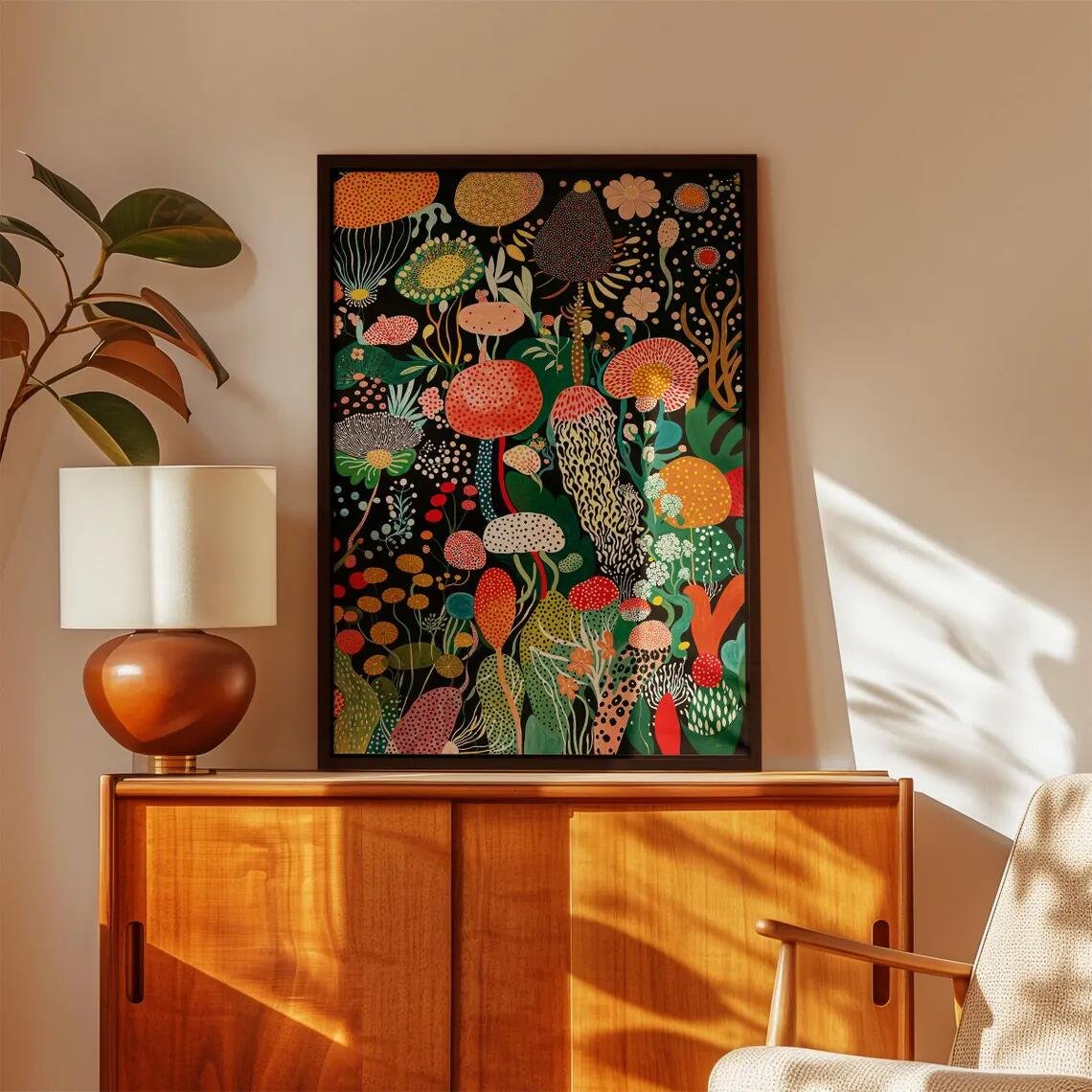
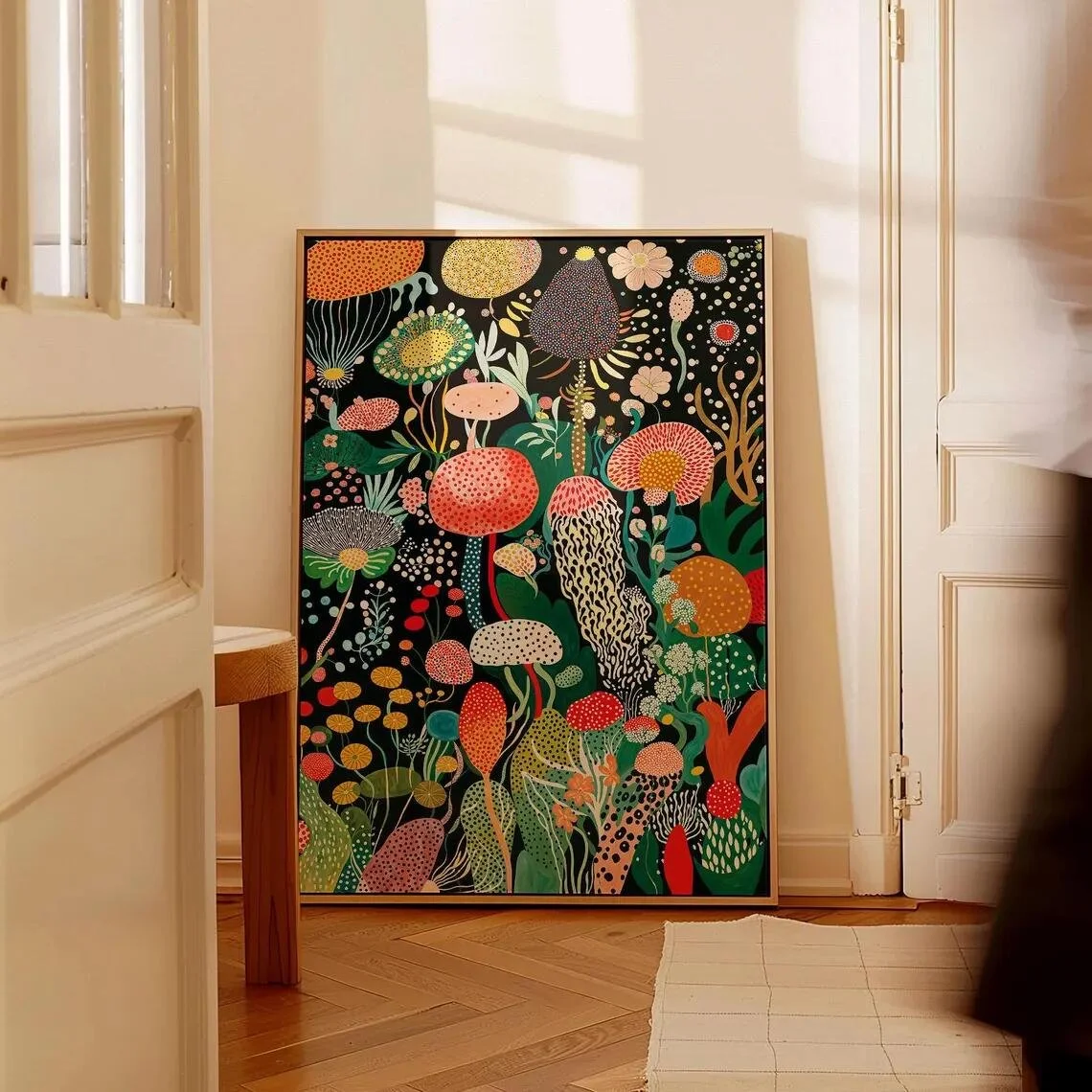
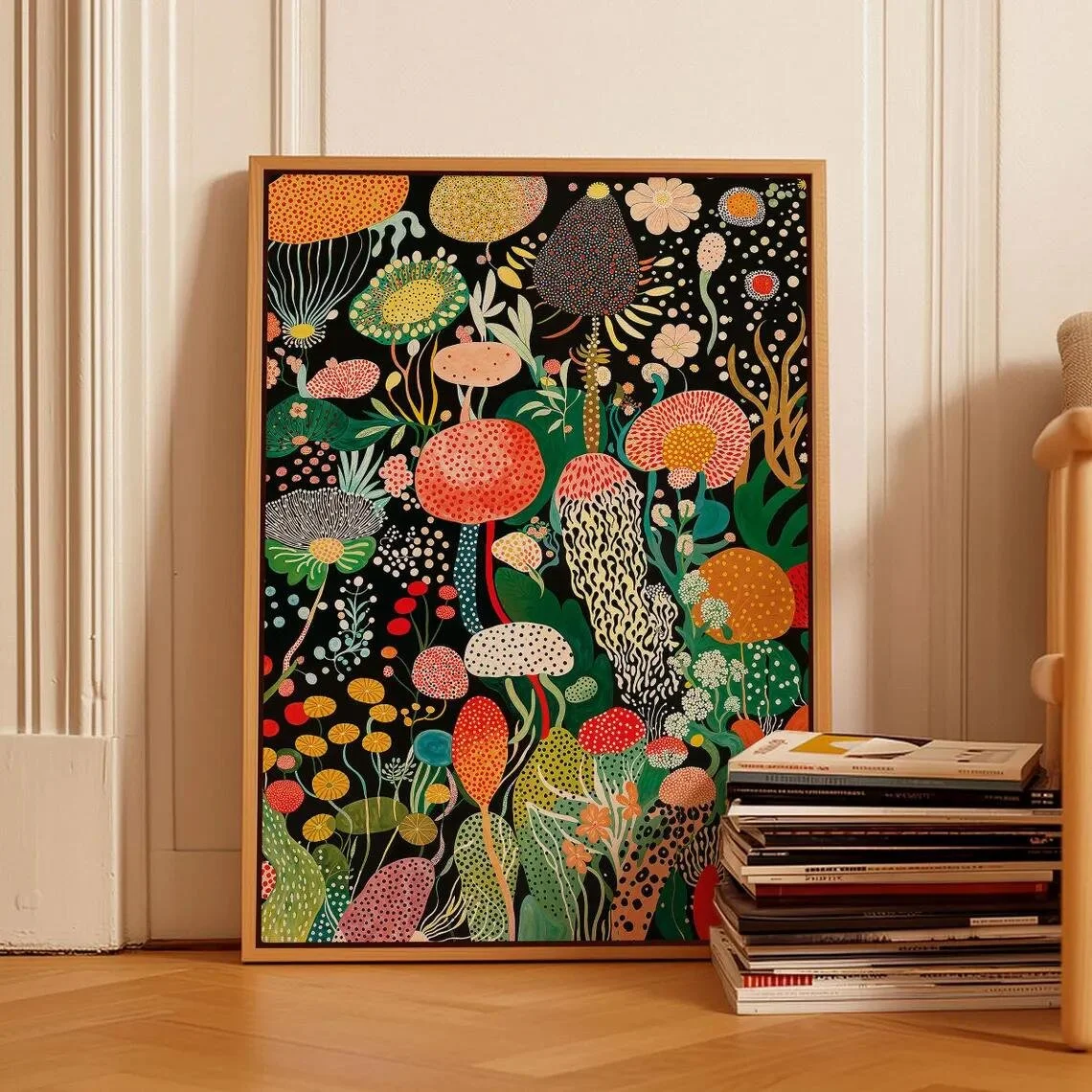
There is something particularly compelling about artwork that balances dense detail with a strong sense of visual order. This framed botanical canvas does exactly that. Its imagery combines a dark ground with clusters of stylized mushrooms, flowers, stems, and rounded organic forms, all animated by repeated dotted patterns. The result sits somewhere between botanical illustration, contemporary decorative art, and the playful visual language associated with Yayoi Kusama.
The Etsy listing presents the piece as a Yayoi Kusama-inspired botanical canvas print, offered by adagioArtLab. It is listed as a Giclée print, with the artwork printed on cotton canvas and shown with a natural wood floating frame. The listing also indicates that multiple size options are available, rather than presenting the piece as a single fixed-format artwork.
What makes the work interesting from an interior-design perspective is not simply its botanical subject. It is the tension between the dark background and the abundance of patterned organic forms. That contrast gives the piece a much stronger presence than a conventional nature print, while its repeated circular motifs create a rhythm that keeps the composition cohesive.
What Makes This Piece Stand Out?
The first thing that catches the eye is the visual density of the composition.
Rather than isolating one flower, mushroom, or botanical form against an open background, the artwork builds a miniature world of overlapping shapes. Different forms occupy much of the surface, creating a feeling of movement from one area to another. This makes the piece especially engaging at closer viewing distances, where the repeated dots and smaller decorative details become more apparent.
The color treatment also contributes to its character. In the listing imagery, warm orange, coral, red, cream, and muted green tones appear against a very dark background. That combination gives the artwork both warmth and depth. The palette is colorful, but the darkness of the background prevents it from feeling visually scattered.
The dotted treatment is equally important. Repeated points appear across petals, mushroom caps, and other organic forms, creating a common visual language throughout the composition. Instead of reading as unrelated decorative patterns, the dots connect the individual elements and give the work a deliberate sense of rhythm.
There is also a useful contrast between organic subject matter and graphic repetition. Plants and fungi traditionally suggest irregularity and natural growth, while repeating circles introduce something much more controlled. That combination is one of the reasons the piece can work well in interiors that sit between contemporary design and more expressive decorative styles.
The Materials and Craftsmanship
The product is presented as a Giclée print on cotton canvas, and the listing imagery shows it within a natural wood floating frame. The seller is identified as adagioArtLab, and the Etsy listing identifies the work as a Giclée print rather than an original painting.
That distinction matters when considering the character of the piece. The appeal here lies in the reproduction of a highly detailed graphic composition rather than the irregularities associated with a one-off original painting.
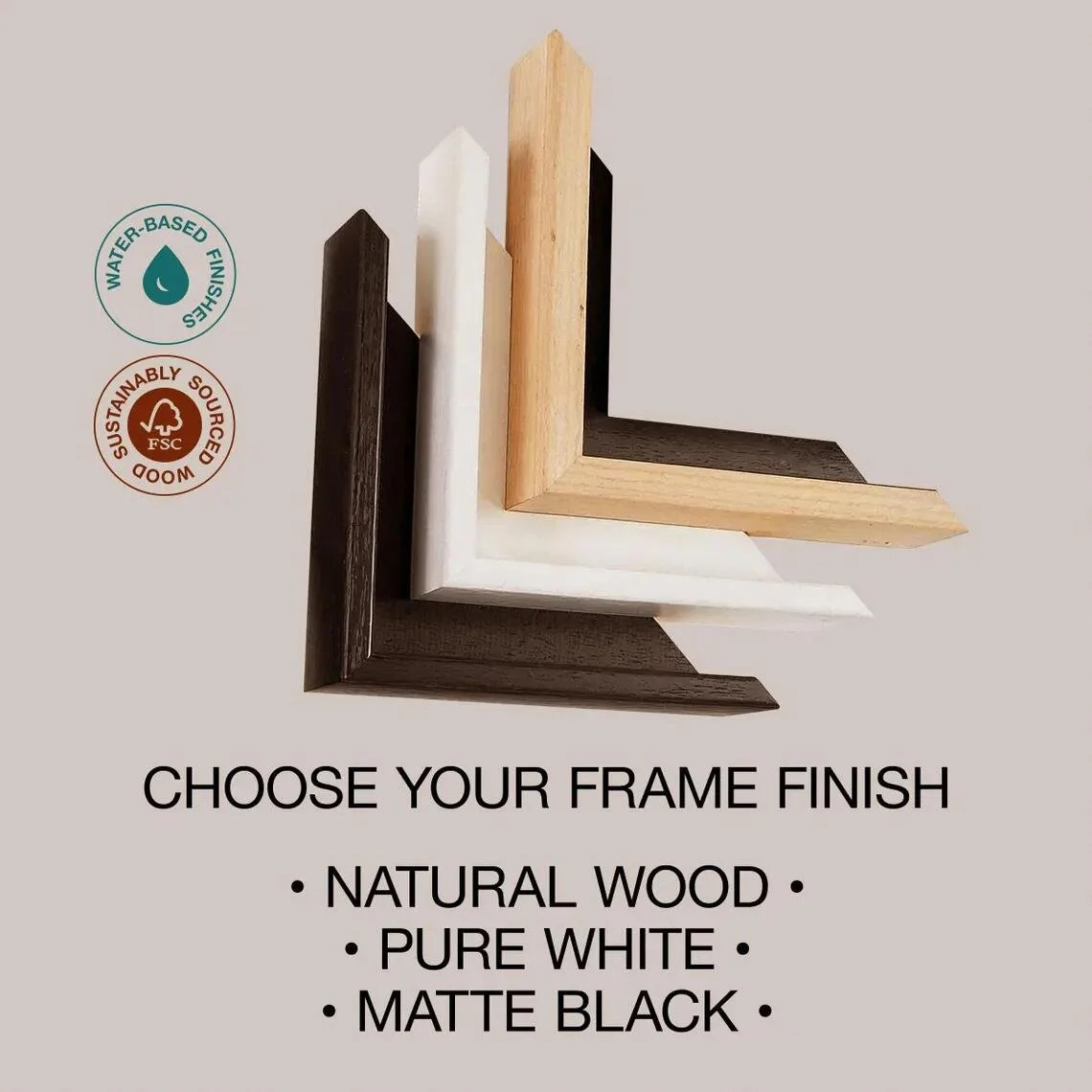
The floating-frame presentation is particularly effective for this type of image. A slim visual separation between the canvas and frame can prevent the artwork from feeling overly boxed in, while the wood introduces a quieter, natural element around a composition that is otherwise quite energetic.
The combination of printed canvas and wood also makes the piece easier to integrate into interiors that mix natural materials with contemporary artwork. A room does not need to be heavily decorated for the artwork to feel at home.
How It Works With Different Interior Styles
This artwork is best suited to interiors that have enough simplicity around it to let its patterning remain visible.
Contemporary
In a contemporary room, the piece can function as a strong focal point against relatively restrained furniture. A neutral sofa, simple coffee table, and uncluttered wall can provide the visual breathing room it needs.
The artwork already contains considerable detail, so there is little need to surround it with multiple competing decorative elements.
Japandi
A Japandi interpretation can work particularly well when the rest of the room remains understated. Light or medium wood, warm neutrals, textured fabrics, and restrained accessories would create an interesting counterpoint to the artwork's darker field.
The natural frame is especially useful here because it connects the expressive print with the softer material language often found in Japandi-inspired spaces.
Organic Modern
The botanical subject naturally lends itself to an Organic Modern setting. Pairing the artwork with oak or walnut furniture, woven materials, stone, ceramics, and understated textiles could create a strong balance between natural references and contemporary structure.
This is also a good environment for the repeated circular motifs. Against tactile materials such as linen, wood grain, or boucle upholstery, the artwork provides a more graphic visual layer.
Eclectic and Art-Led Interiors
For interiors that already embrace color, pattern, and individuality, this piece can become part of a more expressive visual story. The work does not need to match every color in the room. Instead, one or two of its warmer tones could be echoed through cushions, ceramics, or a small decorative object.
Where Could You Display It?
The artwork has enough presence to act as a focal point, but its botanical theme gives it flexibility.
Living Room
The living room is perhaps the most natural setting. Hung above a console or positioned over a restrained seating arrangement, the canvas can become the main visual anchor of the wall.
A particularly effective approach would be to keep the surrounding furniture relatively quiet. The artwork already provides pattern, color, and movement, so a neutral sofa and limited accessories could help maintain balance.
Home Office or Creative Studio
The piece could also suit a workspace where a more distinctive atmosphere is welcome. Its detailed botanical imagery provides visual interest during breaks without relying on the typical motivational-poster aesthetic.
A wooden desk, black metal details, and a few carefully chosen plants would complement the artwork without competing with it.
Bedroom
In a bedroom, the key would be placement and scale. A larger version could serve as a focal point above a dresser or on a feature wall, while a smaller configuration could work in a reading corner.
Because the artwork is visually active, softer bedding and uncomplicated furniture would help create a calmer overall composition.
Hallway or Entryway
A hallway can be an excellent place for artwork with strong visual identity because it does not need to compete with a large amount of furniture. Here, the framed canvas could act almost like a gallery moment—a concentrated burst of botanical color within an otherwise quiet transition space.
How to Style It
The easiest mistake with patterned artwork is trying to repeat everything it contains.
Instead, choose one dominant color family from the artwork and use it selectively elsewhere. A muted green, rust, terracotta, cream, or warm orange can be echoed in one textile or accessory without turning the room into a literal color-matching exercise.
Wood is another natural partner. Because the artwork is shown in a natural wood floating frame, wooden furniture or shelving can create continuity around it. The goal is not to make every wood tone identical, but to establish a shared sense of warmth.
Lighting matters as well. Diffused daylight can reveal the smaller printed details, while warm evening lighting can emphasize the deeper tones of the composition. Avoid placing it where harsh glare dominates the surface.
Most importantly, leave some visual space around the artwork. A piece this detailed benefits from breathing room. When too many patterned objects are placed nearby, its internal structure becomes harder to appreciate.
Who Is This Piece For?
This artwork is likely to appeal to someone who enjoys decorative art with a strong graphic personality but does not want something entirely geometric or purely abstract.
It should be particularly interesting to people who are drawn to botanical subjects but want something less traditional than a conventional botanical print. The mushroom forms, dotted textures, and dense arrangement push the image toward contemporary decorative art rather than straightforward nature illustration.
It may also suit someone building an interior around a single expressive artwork rather than a large gallery wall. The composition has enough variation to reward close inspection, while the repeating dots give it enough consistency to function as a unified visual statement.
The connection to Yayoi Kusama's visual language adds another layer of interest, although the listing describes the work as inspired by Kusama rather than presenting it as an original Kusama artwork.
Final Thoughts
The appeal of this framed botanical canvas lies in its ability to combine several visual ideas at once: nature, repetition, rich color, graphic pattern, and contemporary composition.
It is not the kind of wall art that disappears quietly into the background. Instead, it works best when given enough space to become part of the room's visual identity. At the same time, the botanical subject and natural wood framing make it easier to integrate into warm, material-focused interiors than a purely graphic abstract might be.
For interiors built around contemporary furniture, Organic Modern textures, Japandi restraint, or more eclectic art collections, the piece offers an interesting middle ground between natural imagery and bold decorative pattern.
Ultimately, its strongest quality is its rhythm. The repeated dots tie together the many botanical forms, allowing a busy composition to feel intentional rather than chaotic.
Some links on this page may be affiliate links. If you make a purchase through one of these links, we may earn a small commission at no extra cost to you.
