
Mountain Wall Art: An Abstract Landscape for Warm, Contemporary Interiors
There is something timeless about mountain imagery in interior design. Peaks, valleys, distant horizons, and layered landscapes naturally introduce a sense of depth, while abstract treatment allows the image to feel less like a literal photograph and more like an interpreted landscape.
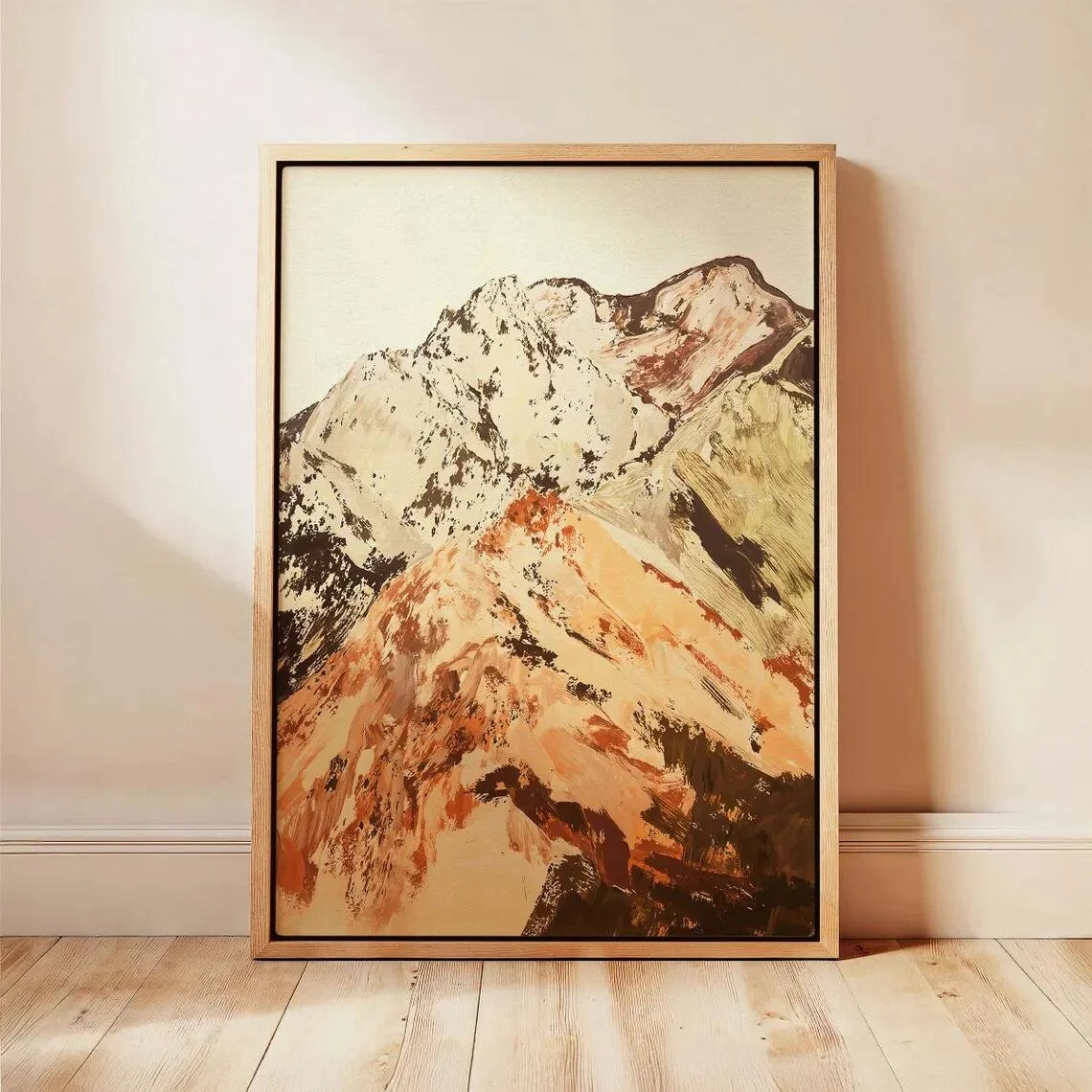
The Framed Mountain Canvas Print, Abstract Rustic Landscape Wall Art from adagioArtLab takes that familiar subject and presents it as a contemporary framed canvas print. The result is a piece that sits somewhere between traditional landscape imagery and modern decorative art: recognizable enough to suggest a mountain setting, but visually open enough to work with a range of interiors. The Etsy listing describes it as a framed canvas print designed by adagioArtLab, produced with canvas and wood and supplied ready to hang. (Etsy)
What Makes This Piece Stand Out?
The strongest quality of this artwork is the way the mountain subject is translated into a decorative, abstract composition rather than treated as a conventional realistic landscape.
The listing imagery presents the artwork within a floating frame, giving the canvas a slight visual separation from the frame itself. That detail matters in an interior because it prevents the frame from feeling like a heavy border around the artwork. Instead, the canvas has room to breathe, creating a cleaner transition between art and surrounding wall space. The seller offers Natural Wood, Matte Black, and Pure White frame finishes, allowing the same artwork to take on subtly different personalities depending on the room. (Etsy)
From an interior-design perspective, the mountain subject also gives the composition a strong architectural quality. Peaks naturally introduce diagonals and changes in elevation, which can break up a wall dominated by horizontal furniture such as sofas, sideboards, consoles, or beds.
That makes this type of artwork particularly effective when a room needs a visual focal point without relying on an extremely decorative or figurative image.
The Materials and Craftsmanship
According to the listing, the artwork is printed using Giclée printing on heavyweight 400gsm artist-grade cotton canvas, with archival inks intended to maintain color vibrancy over time. The canvas is mounted and framed by skilled professionals, and the finished piece arrives fully assembled and ready to hang. (Etsy)
The frame itself is described as a floating frame handcrafted from FSC-certified wood, with a 0.5-inch face, a 0.25-inch floating gap, and a depth of approximately 2 inches from the wall. Three finishes are offered: Natural Wood, Matte Black, and Pure White. (Etsy)
The production model is made to order rather than based on pre-made stock. The listing also states that the work is produced with the help of premium production partners in the UK, EU, and US. (Etsy)
There is an additional environmental consideration in the seller's specifications: the materials are described as sustainably sourced, the inks as water-based and non-toxic, and the packaging as recyclable and low-impact. (Etsy)
These details are useful not simply as specifications, but because they influence how the finished artwork feels in a room. Cotton canvas brings a softer, textile-like surface than a glossy photographic print, while the floating wooden frame gives the piece a more architectural presence.
How It Works With Different Interior Styles
Modern and Contemporary
This is perhaps the most straightforward setting for the artwork. A contemporary room with clean-lined furniture, restrained accessories, and plenty of negative space can allow the mountain composition to become the main visual event.
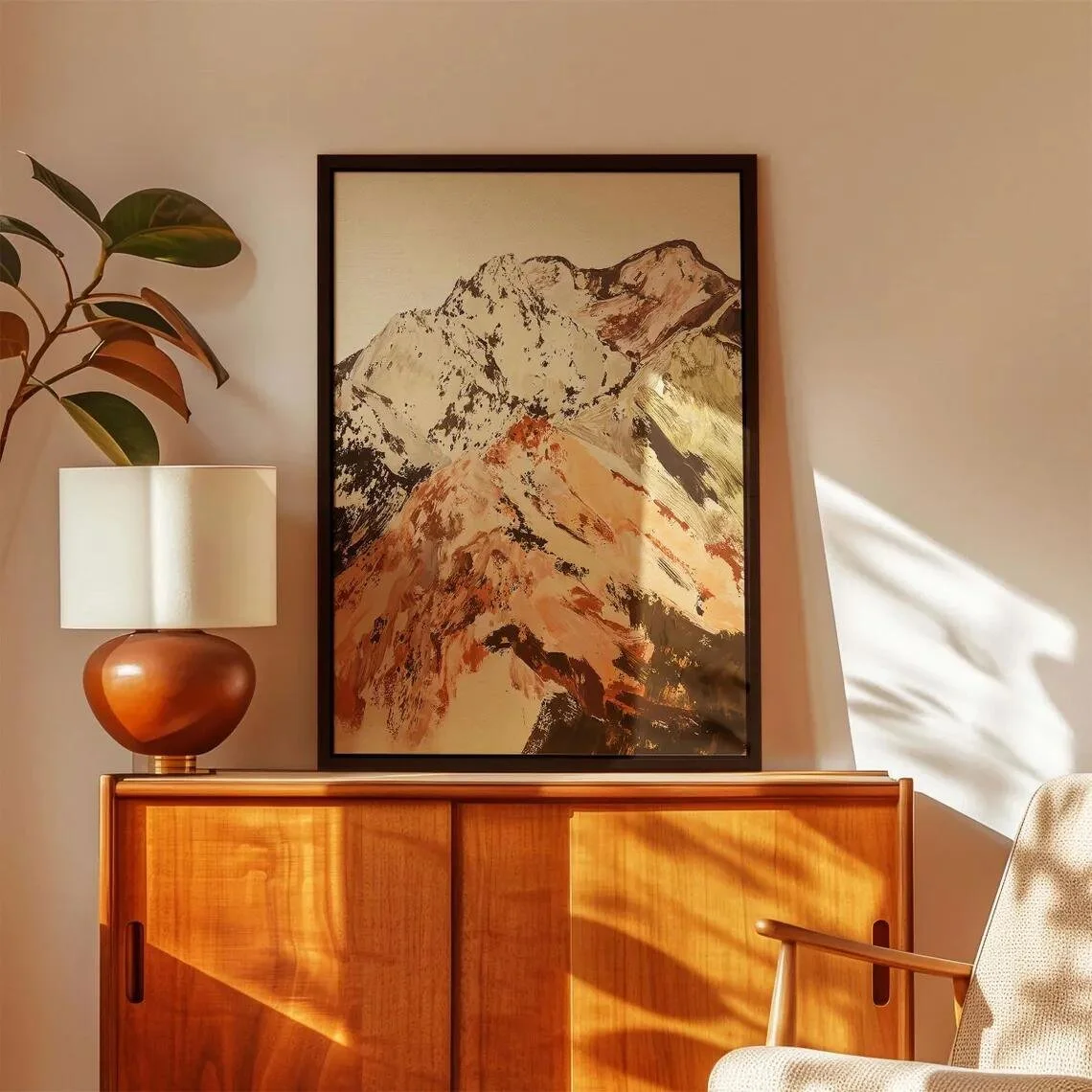
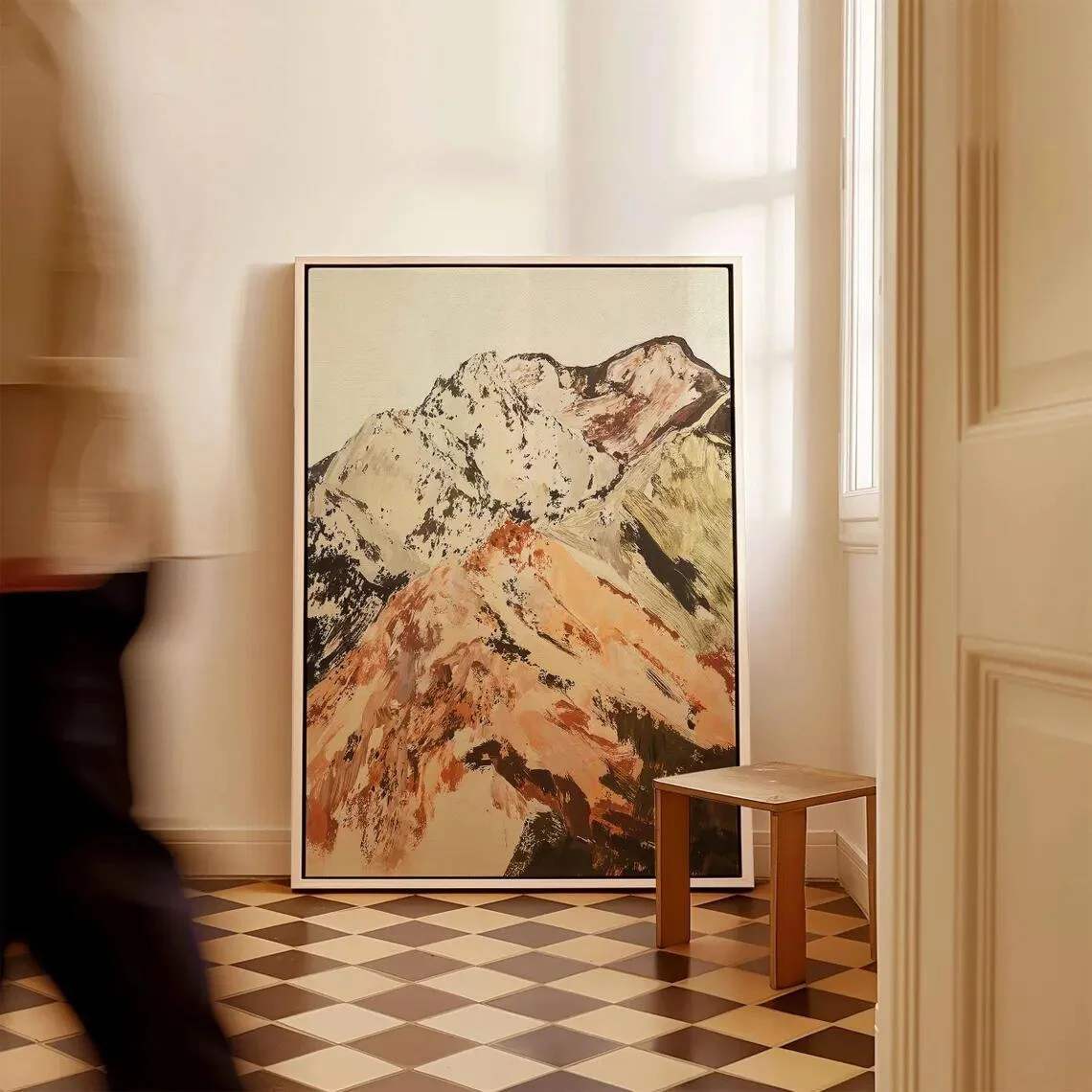
A black frame can reinforce a sharper, more graphic interior, while white can make the artwork feel lighter and less visually dominant. Natural wood moves the piece toward a softer interpretation of contemporary style.
Organic Modern
The combination of landscape imagery and wood makes the artwork particularly interesting in an organic modern room.
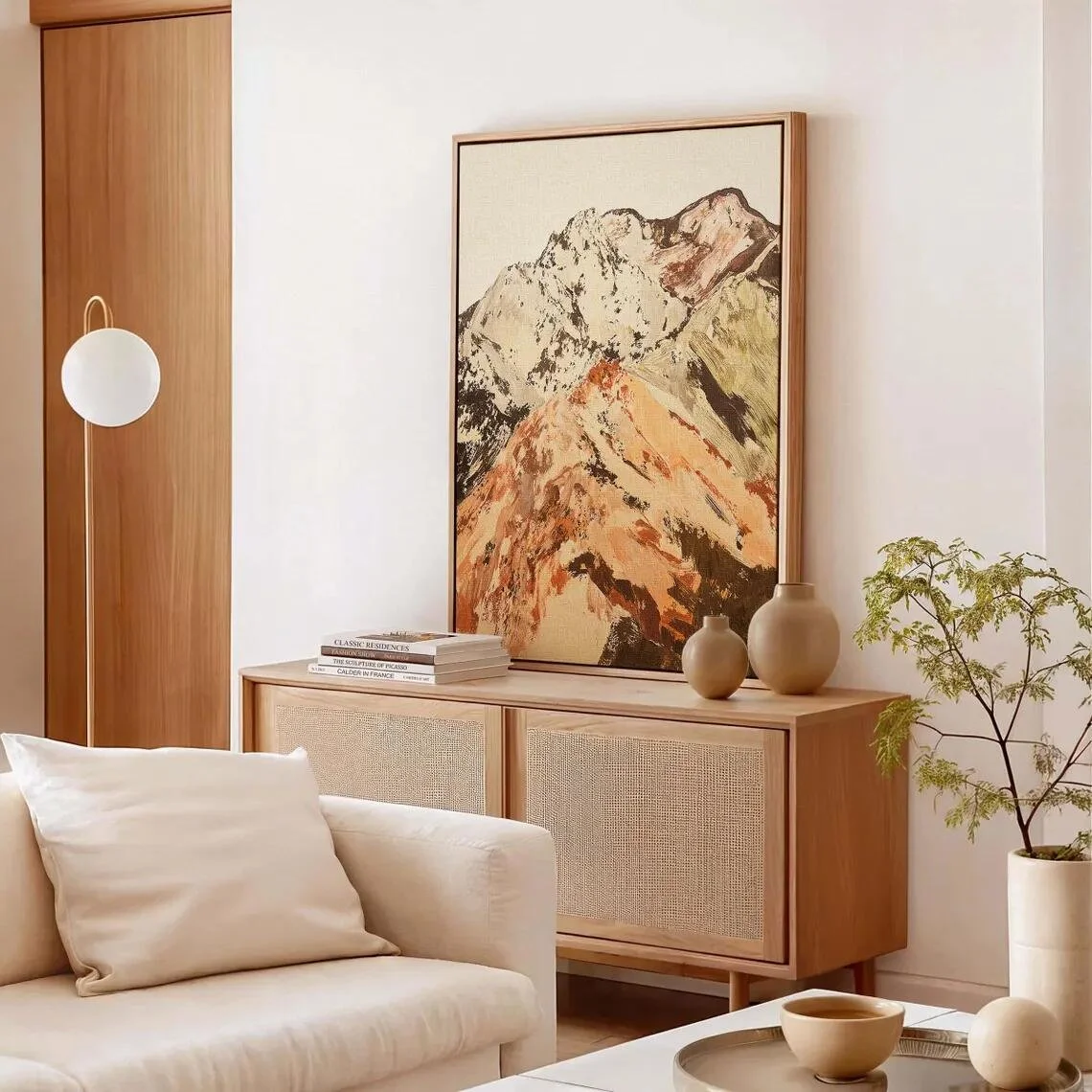
Consider pairing it with oak or walnut furniture, linen upholstery, ceramic accessories, woven textures, and muted neutral walls. The artwork can introduce the visual presence of nature without requiring the room itself to become overtly rustic.
Rustic and Modern Rustic
Despite its contemporary production, the piece can also work well with modern-rustic interiors. The mountain subject naturally complements wood, stone, leather, textured textiles, and warm neutral finishes.
The key is restraint. Rather than surrounding it with many obvious mountain or cabin-themed accessories, let the artwork act as the connection between the natural materials and the more modern elements of the room.
Scandinavian
A lighter frame and a pared-back room can push the artwork toward a Scandinavian interpretation. Pale woods, off-white walls, simple furniture, and soft textiles can create enough visual calm for the landscape to remain the focal point.
The artwork does not need a heavily decorated setting. In fact, its strongest effect may come when the surrounding space is relatively quiet.
Japandi
A Japandi interpretation is also possible, particularly with a Natural Wood or Pure White frame.
Japandi interiors often rely on visual balance, natural materials, muted palettes, and carefully controlled decoration. A landscape-based artwork can fit naturally into that philosophy, provided the surrounding styling remains simple rather than busy.
Where Could You Display It?
The seller specifically presents the artwork as suitable for living rooms, bedrooms, studios, and workspaces, and its flexible horizontal presentation gives it several practical possibilities. (Etsy)
Living Room
In a living room, the artwork could work especially well above a sofa, sideboard, or low console. The horizontal format can visually connect the furniture beneath it while providing a stronger vertical element on the wall.
For a calmer arrangement, leave generous negative space around the frame instead of filling the wall with multiple decorative objects.
Bedroom
Above a bed, landscape art can create a quieter visual atmosphere than highly graphic or colorful artwork. The mountain subject lends itself naturally to a restful bedroom palette, particularly when paired with linen, warm neutrals, natural wood, and soft lighting.
A lighter frame can help preserve that sense of calm, while a dark frame can provide more contrast in a room with darker furniture.
Home Office or Studio
The artwork can also make sense in a workspace where the walls need personality without becoming visually distracting.
A mountain landscape introduces an outward-looking quality that can help prevent a compact office from feeling overly enclosed. Pairing it with a simple wooden desk, restrained shelving, and a limited accessory palette would keep the composition visually coherent.
How to Style It
The easiest approach is to borrow one or two visual qualities from the artwork rather than trying to match every element.
For a warm natural scheme, look toward beige, cream, taupe, muted brown, warm gray, and wood tones. These colors can reinforce the landscape character without competing with it.
For a more contemporary scheme, black accents and cooler neutrals can provide contrast. A Matte Black frame can be particularly effective when repeated through small details such as lighting, furniture hardware, or a nearby side table. The seller also offers Pure White and Natural Wood finishes, so the frame itself can be used as part of the room's color strategy. (Etsy)
Lighting deserves equal attention. Wall art generally benefits from even illumination rather than harsh directional light. A nearby floor lamp, picture light, or carefully positioned ambient lighting can emphasize the canvas surface while preserving the artwork's overall atmosphere.
Most importantly, avoid overcrowding the wall. Mountain compositions already contain movement through their peaks and layered forms. Giving the artwork enough breathing room allows that visual structure to remain legible.
Choosing the Right Size
One of the more useful features of this listing is the unusually broad range of available dimensions. The seller lists options from 9 × 12 inches through 40 × 55 inches, with custom sizes available on request. (Etsy)
Rather than thinking of one size as the "correct" version, it makes more sense to choose according to the wall and furniture beneath it.
A smaller format can work in a bedroom, office, hallway, or compact wall section. Larger configurations become more appropriate when the artwork is intended to anchor a sofa wall, large console, or spacious open-plan interior.
The proportions of the surrounding furniture matter just as much as the dimensions of the artwork itself. The goal is visual balance: the artwork should feel substantial enough for the wall without overwhelming the furniture below it.
Who Is This Piece For?
This artwork will likely appeal to someone who enjoys nature-inspired imagery but prefers an artistic interpretation over a literal photographic landscape.
It is also a natural choice for decorators who want their wall art to introduce warmth and atmosphere without dominating the entire room. The subject has enough character to establish a focal point, while the framed-canvas format keeps the presentation relatively refined.
For someone furnishing a modern home with natural materials, understated colors, and a mixture of contemporary and rustic elements, the artwork offers an easy visual bridge between those influences.
It may be less appropriate for interiors built around highly saturated colors, maximalist pattern, or strongly ornate traditional decoration, where the restrained landscape composition could become visually disconnected from its surroundings.
Final Thoughts
What makes this mountain artwork interesting is not simply its subject. Mountain wall art is familiar, but abstraction, layered composition, canvas texture, and the floating wooden frame allow the subject to function as an interior-design element rather than merely a depiction of scenery.
The choice of frame finish is particularly useful because it changes how the artwork relates to its surroundings. Natural Wood supports a warmer, more organic room; Matte Black creates stronger definition; and Pure White offers a quieter, lighter presentation. Combined with the broad selection of sizes, that flexibility makes the piece adaptable to very different wall compositions. (Etsy)
Ultimately, this is the kind of artwork that works best when given room to breathe. Let the landscape provide the visual interest, keep the surrounding styling considered rather than excessive, and allow the mountain forms to become a subtle architectural presence within the room.
Some links on this page may be affiliate links. If you make a purchase through one of these links, we may earn a small commission at no extra cost to you.
