
The Art of the Organic Mirror: A Sculptural Walnut Accent for Modern Interiors
A mirror does not always have to behave like a mirror.
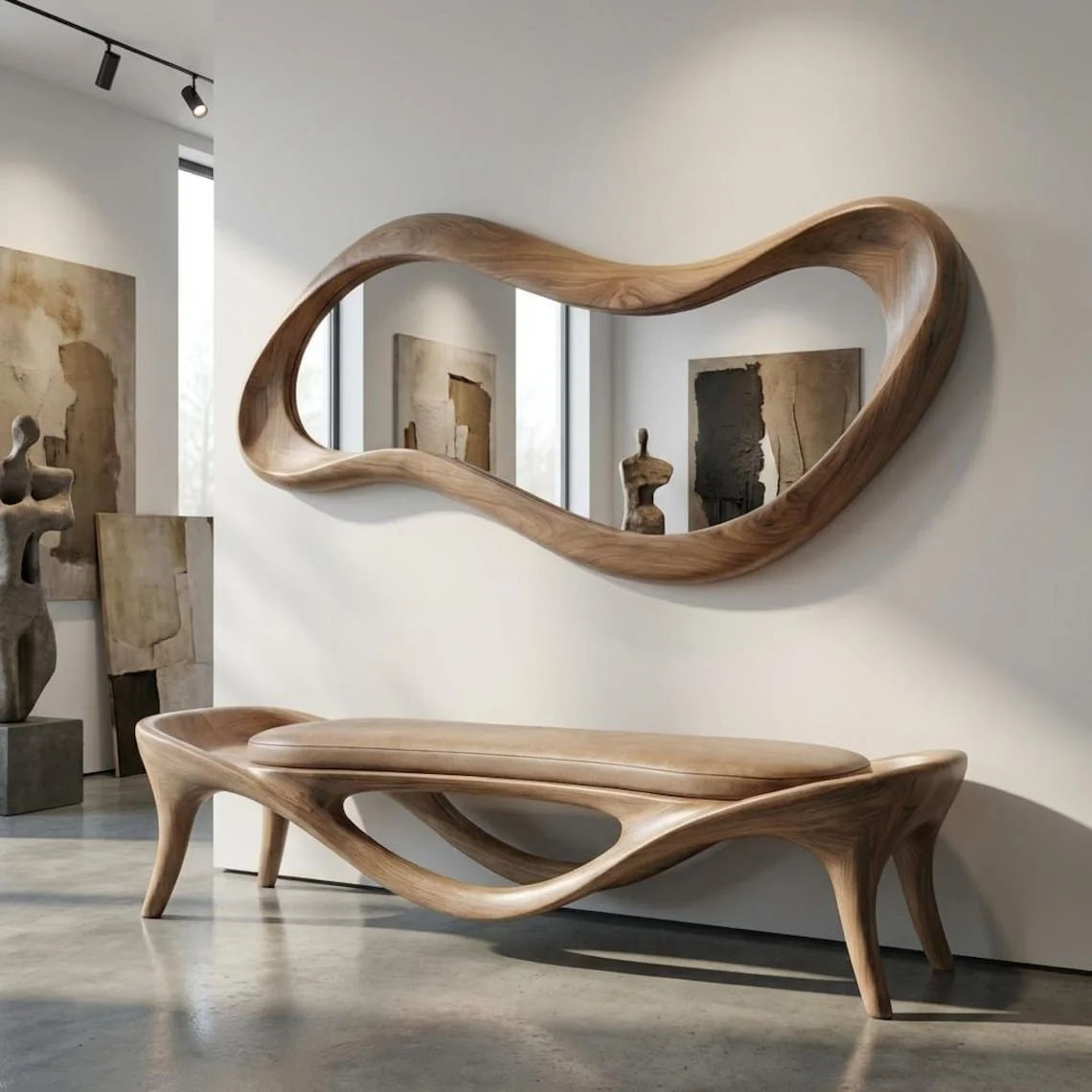
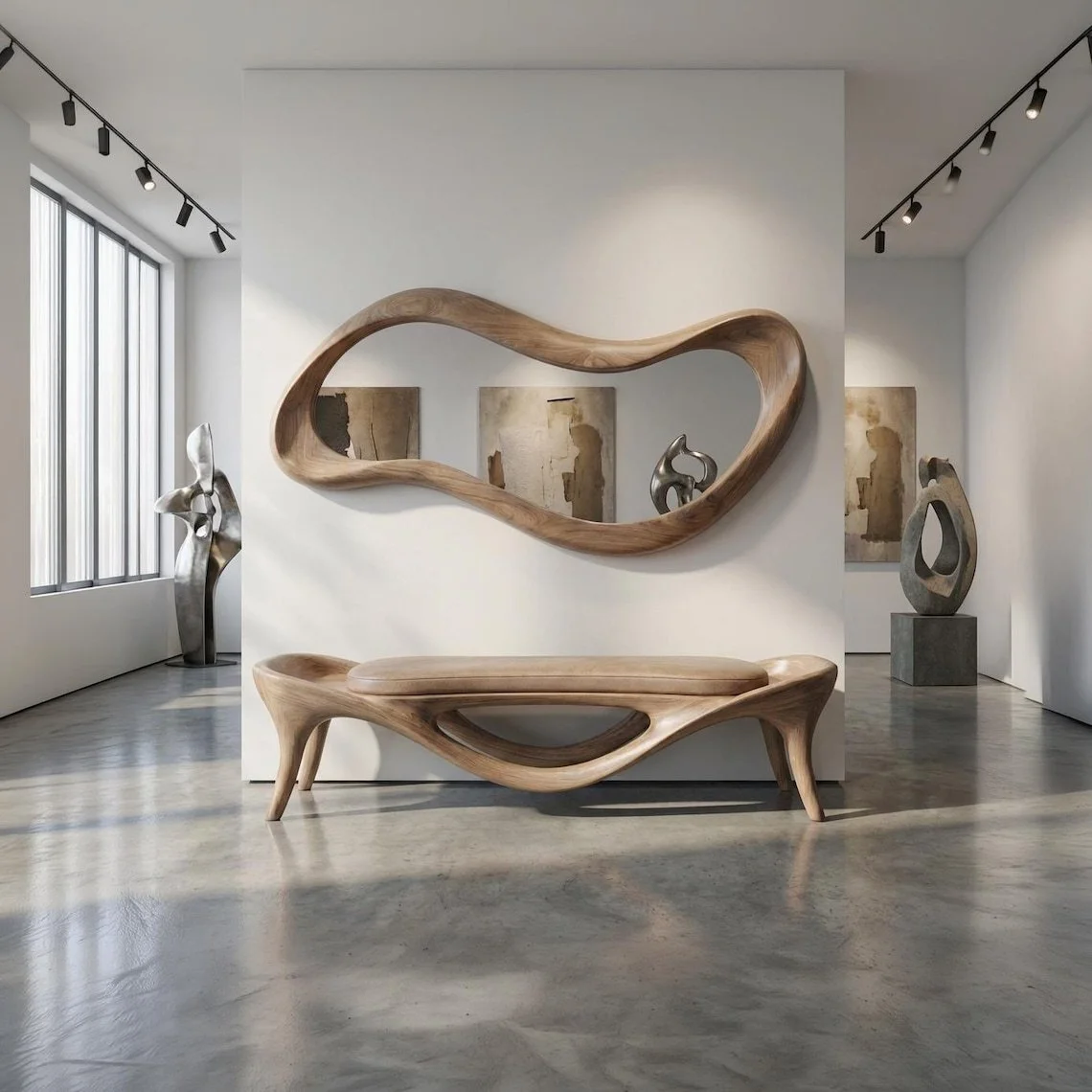
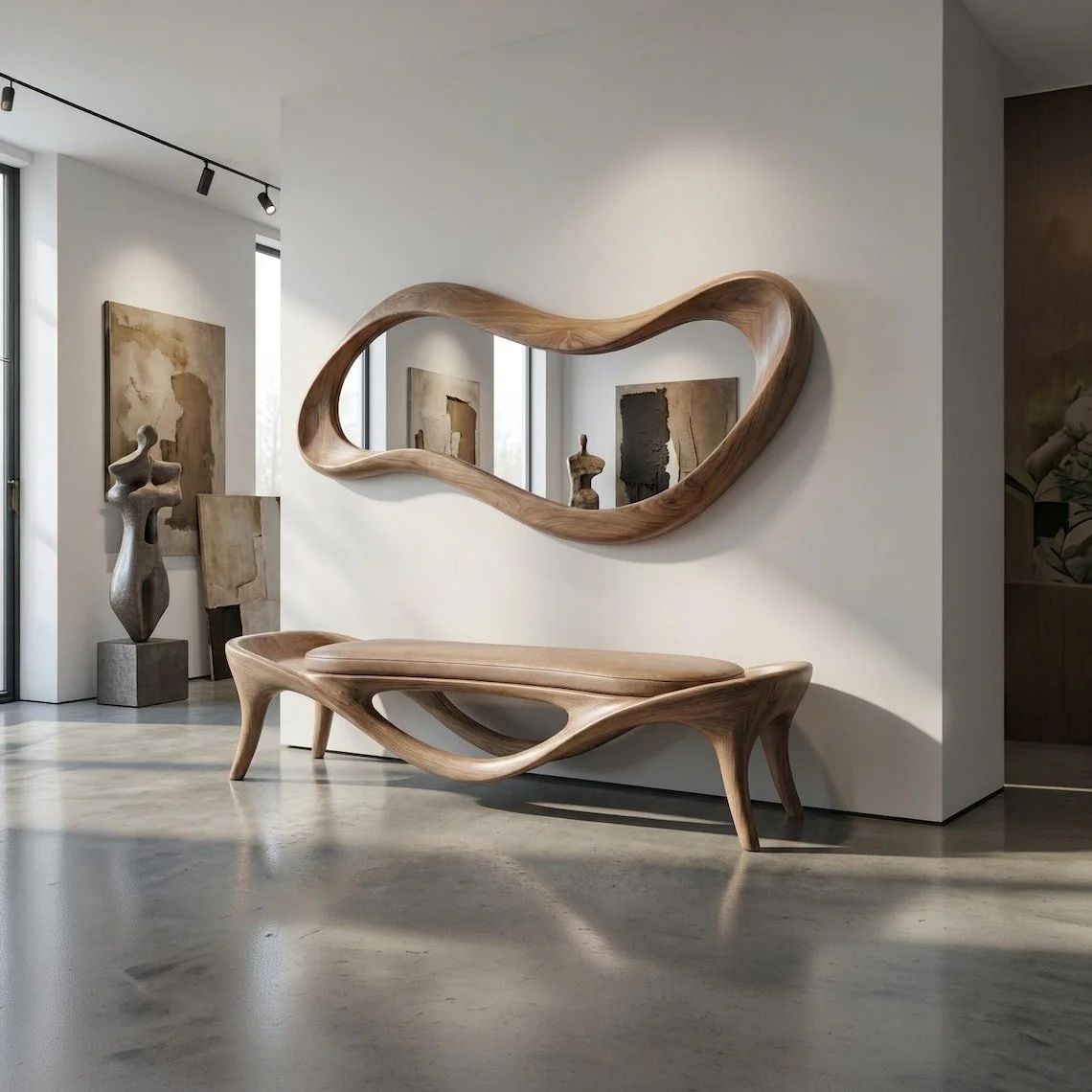
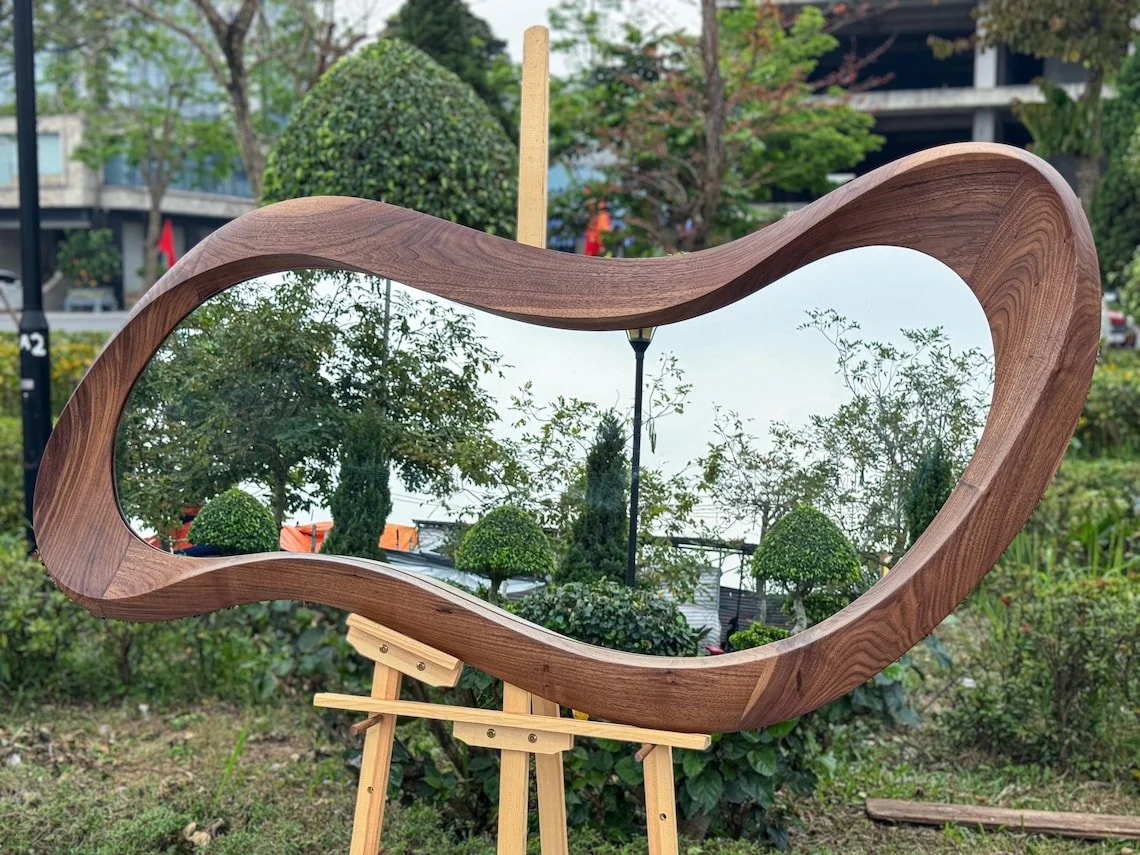
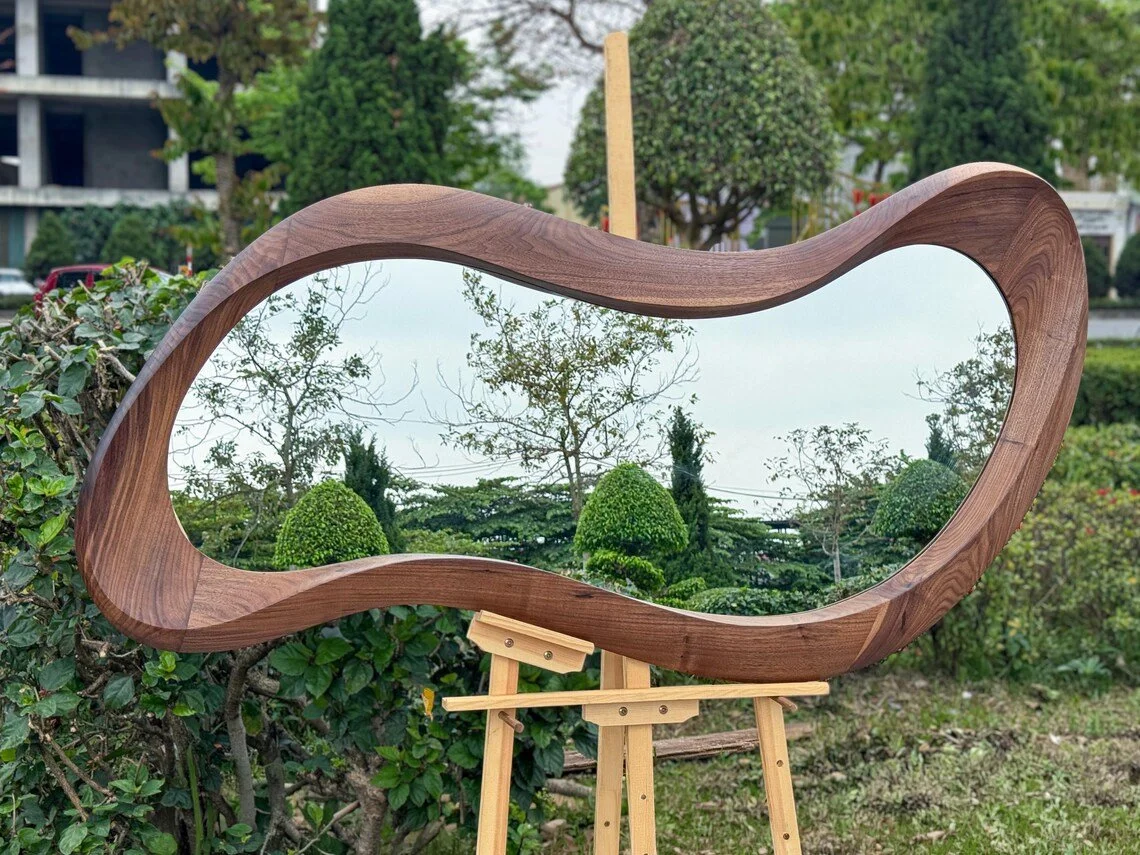
In contemporary interiors, reflective surfaces are increasingly being treated as decorative objects in their own right, and this asymmetrical walnut wood mirror is a good example of that shift. Rather than relying on a conventional rectangle, circle, or oval, the piece is shaped around a flowing, irregular silhouette that gives the wall a more sculptural presence.
The Etsy listing presents the mirror as a mid-century modern and abstract wall decor piece, made by MirrorArtVN. According to the seller, it is handcrafted in Vietnam from real solid wood, with walnut or oak available, and finished with natural hardwax oil. Custom sizes and specific wood tones can also be requested.
What makes the design particularly interesting is the relationship between its practical function and its visual character. It can reflect light and surrounding objects like a conventional mirror, yet the irregular wooden frame gives it the presence of a piece of wall art.
What Makes This Piece Stand Out?
The most immediate feature is its asymmetrical outline.
Instead of a perfectly balanced geometric shape, the frame moves through a sequence of soft curves, creating an almost fluid contour. The result feels closer to a natural form than to a rigid architectural object. That visual softness is important: the mirror adds movement to a wall without relying on intense color or elaborate ornament.
The seller describes the form as being inspired by shapes found in nature, including water ripples, smooth river stones, and flowing tree lines. That description is consistent with what can be seen in the product imagery, where the frame has a continuous, organic rhythm rather than a predictable geometric structure.
The wood itself reinforces that impression.
The frame has a warm brown presence, and the visible grain introduces variation across its surface. From an interior-design perspective, this is one of the strongest aspects of the piece. The mirror does not simply add reflection; it also introduces a natural material and a tactile visual element to an otherwise flat wall.
The asymmetrical shape also changes how the surrounding space is perceived. A traditional rectangular mirror can function almost like another architectural boundary. This one feels more like an object placed within the architecture. That makes it especially useful in rooms where the goal is to soften straight lines and introduce a little visual spontaneity.
Materials and Craftsmanship
The listing identifies the materials as mirror and wood, and the seller states that the frames are made from real solid walnut or oak. The wood is finished with natural hardwax oil, described by the seller as producing a satin surface that enhances the original appearance and grain.
The seller also describes the mirrors as handmade by Vietnamese artisans in their workshop in Vietnam. Each frame is said to display its own wood-grain pattern, meaning that the natural variation of the material becomes part of the finished appearance rather than something hidden or standardized.
That detail matters aesthetically. Organic-shaped furniture and decor often depend on subtle irregularity to avoid looking overly manufactured. With a piece like this, the curved silhouette provides one layer of visual interest while the wood grain supplies another.
The result is a combination of smooth reflective glass and naturally varied timber. One surface is cool, bright, and visually open; the other is warm, tactile, and grounded. That contrast gives the mirror more depth than a frameless reflective surface would normally have.
The listing also allows for multiple size options and custom dimensions, while the seller notes that walnut or oak can be selected and that specific wood tones may be requested.
How It Works With Different Interior Styles
Although the listing identifies the piece with mid-century modern design, its organic silhouette allows it to move comfortably across several contemporary decorating approaches.
Mid-Century Modern
This is the most obvious pairing.
The warmth of walnut and the sculptural outline work naturally with the mid-century preference for wood, clean forms, and carefully chosen statement pieces. It would sit comfortably above a low wooden console, alongside tapered-leg furniture, or near a simple upholstered bench.
The key is restraint. Because the mirror already has a distinctive shape, the surrounding furniture does not need to compete with it.
Organic Modern
Organic modern interiors are perhaps an even stronger match.
This style often combines modern proportions with natural materials, curved forms, warm wood, neutral colors, and a relaxed sense of balance. The mirror's irregular silhouette fits naturally into that vocabulary.
Pair it with linen, stone, light oak, soft beige, warm white, muted clay, or earthy green tones, and the wood frame can act as a visual bridge between the softer elements.
Contemporary Interiors
A contemporary room can also benefit from the contrast.
Against a clean white, cream, gray, or muted neutral wall, the darker wood frame becomes a focal point without requiring a bright accent color. The unusual outline is enough to create interest.
This works particularly well when the rest of the room has relatively simple furniture. In such a setting, the mirror can become the feature that gives the wall personality.
Japandi
Japandi is another possible direction, particularly when the room already incorporates natural wood and a restrained palette.
The flowing shape works with Japandi's appreciation for simplicity and natural forms, while the wood frame adds warmth. The main consideration is visual balance: keep nearby accessories quiet and avoid filling the wall with too many competing decorative objects.
Scandinavian
The piece can also work in Scandinavian-inspired rooms, although the darker wood may create more contrast than the lighter woods often associated with the style.
That contrast can actually be useful. Against a pale wall with soft textiles and understated furnishings, the frame can provide a grounding element without making the room feel heavy.
Where Could You Display It?
The versatility of an organic mirror comes from the fact that it can function both as a practical object and as wall decor. The best placement depends largely on how much visual attention you want it to receive.
Entryway
An entryway is one of the strongest options.
Placed above a console or near a simple bench, the mirror can create an immediate focal point while also serving a practical purpose. A small arrangement of objects on the console—perhaps a ceramic vessel, a stack of books, or a single branch—would provide enough context without overwhelming the irregular shape.
Because entryways often have relatively limited furniture, the sculptural outline can carry much of the room's visual character.
Living Room
In a living room, the piece could work particularly well above a low console, sideboard, or similarly horizontal piece of furniture.
The contrast between the horizontal furniture and the flowing vertical wall element can create a pleasing composition. It can also help break up a large blank wall without the visual heaviness of a large framed painting.
A particularly effective approach would be to let the mirror remain the primary focal point while keeping surrounding artwork relatively minimal.
Bedroom
The mirror also makes sense in a bedroom, especially where the goal is to create a softer atmosphere.
The rounded, irregular form introduces movement without becoming visually aggressive. Warm wood, neutral bedding, and soft lighting would complement the piece naturally.
A recent buyer review on the listing specifically describes using the mirror in a bedroom, while another review mentions the possibility of adding one to a living room. These are individual customer experiences rather than universal recommendations, but they do illustrate the piece's flexibility in residential settings.
Dining Area
A dining room or dining nook could be another interesting application.
Placed on a wall adjacent to the dining table, the mirror could reflect light and introduce another layer of depth. It would work especially well where the room already includes wooden furniture, curved chairs, or natural textures.
The important consideration is what the mirror will reflect. A carefully composed reflection can make the artwork feel more integrated into the room; a cluttered reflection can have the opposite effect.
How to Style an Asymmetrical Walnut Mirror
The easiest way to style a piece like this is to resist the temptation to over-style it.
The mirror already contains several visual elements: the irregular silhouette, the wood grain, the frame, and the reflection. Adding too many decorative objects nearby can make the wall feel busy.
Instead, consider creating contrast through material and proportion.
Warm woods work naturally with the frame, while lighter walls can help the darker timber stand out. Cream, oatmeal, warm white, muted gray, olive, terracotta, and other subdued earthy tones can complement the natural character of the wood without competing with it.
Curved furniture can reinforce the organic language of the mirror. A rounded bench, soft-edged side table, or sculptural ceramic object can create a visual conversation between the different pieces in the room.
Lighting also matters.
Natural daylight can emphasize the variation in the wood grain, while warm artificial lighting can make the timber feel richer in the evening. Avoid placing a strong light source where it creates an uncomfortable glare in the mirror. Instead, think about what the reflective surface will reveal from its position.
Perhaps the most important styling principle is negative space.
Leave enough room around the mirror for its outline to remain legible. An asymmetrical form needs breathing room; when surrounded by too many objects, some of its impact disappears.
Who Is This Piece For?
This mirror will likely appeal most to someone who sees wall decor as more than something that simply fills an empty space.
It suits a design-conscious interior where natural materials, unusual silhouettes, and quieter forms of visual expression are valued. It may be particularly appealing to people drawn to mid-century modern, organic modern, contemporary, or nature-influenced interiors who want something less predictable than a standard round or rectangular mirror.
It is also a good choice for someone who appreciates the variation inherent in natural wood. Since the seller states that the grain pattern differs from one frame to another, the material itself contributes to the individuality of each piece.
At the same time, the design is restrained enough that it does not require an aggressively artistic room around it. That balance is one of its strengths: the mirror can become a focal point without demanding that everything else in the room follow the same aesthetic language.
Final Thoughts
The appeal of this asymmetrical walnut mirror lies in its ability to occupy the space between functional object and decorative artwork.
Its mirror surface remains practical, but the organic frame changes the way it behaves visually. Instead of reading as a simple reflective rectangle, it becomes a sculptural form that brings warmth, movement, and natural texture to the wall.
The combination of solid wood, visible grain, handmade construction, and an irregular silhouette gives it a distinctive character without relying on excessive ornament. The design is particularly convincing in interiors that value natural materials and soft, flowing forms, from mid-century modern spaces to contemporary and organic-modern rooms.
Ultimately, the mirror works best when given room to breathe. Place it thoughtfully, pair it with a restrained palette, and allow its shape and material to do most of the visual work. That is where this piece feels most successful—not as decoration added to a room, but as an object that helps shape the room around it.
Some links on this page may be affiliate links. If you make a purchase through one of these links, we may earn a small commission at no extra cost to you.
