
Handmade Walnut Decorative Mirror Set: Organic Wood Forms for Modern Interiors
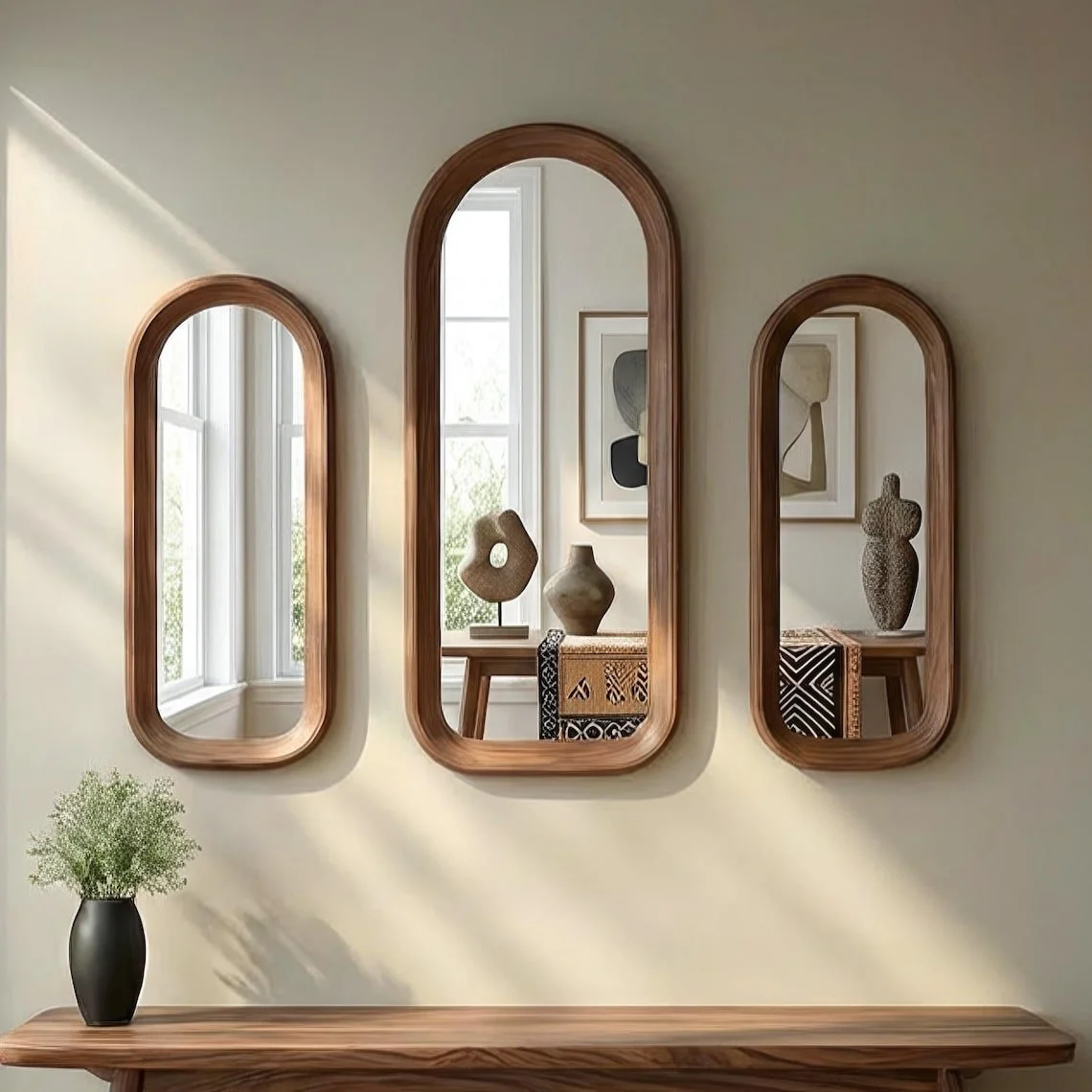
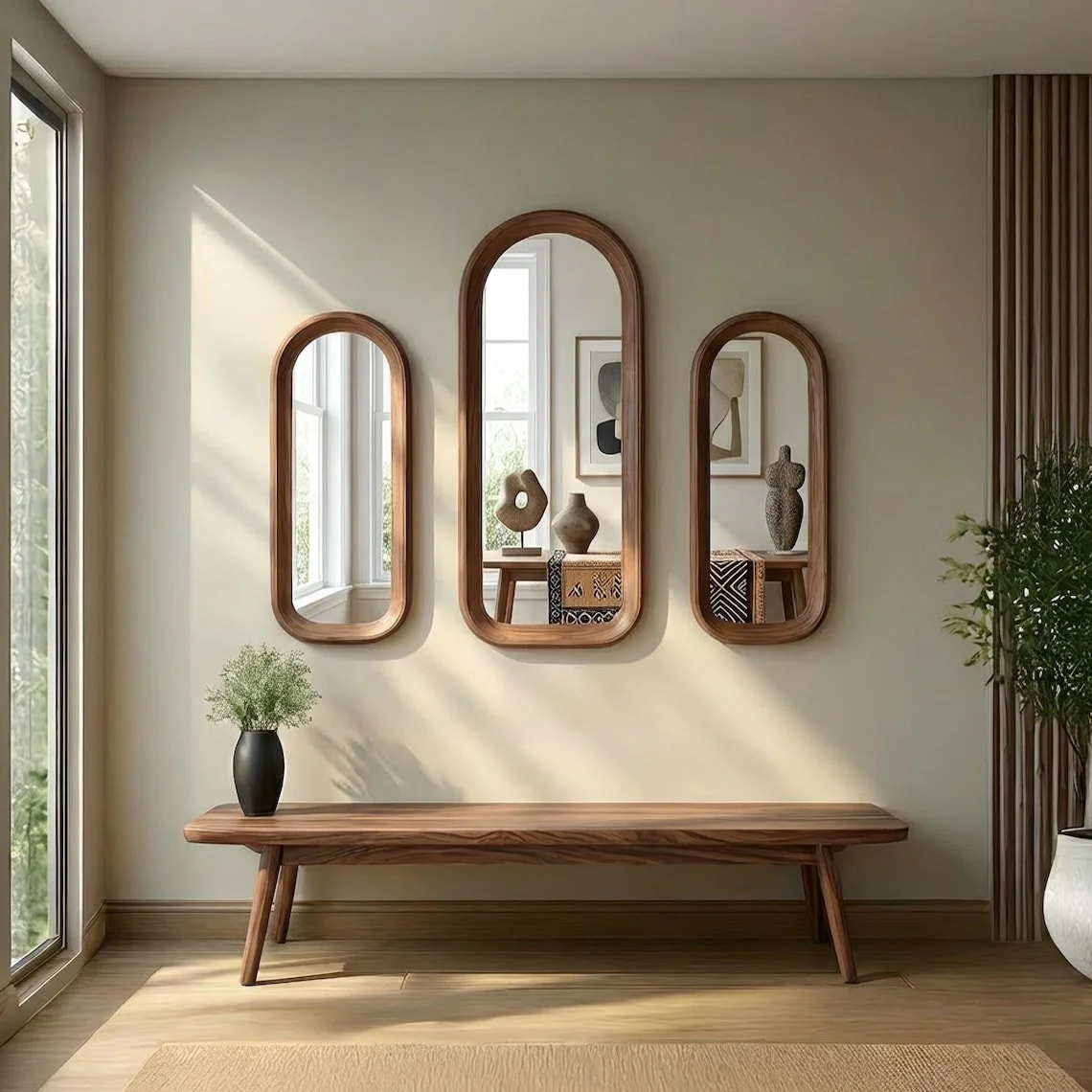
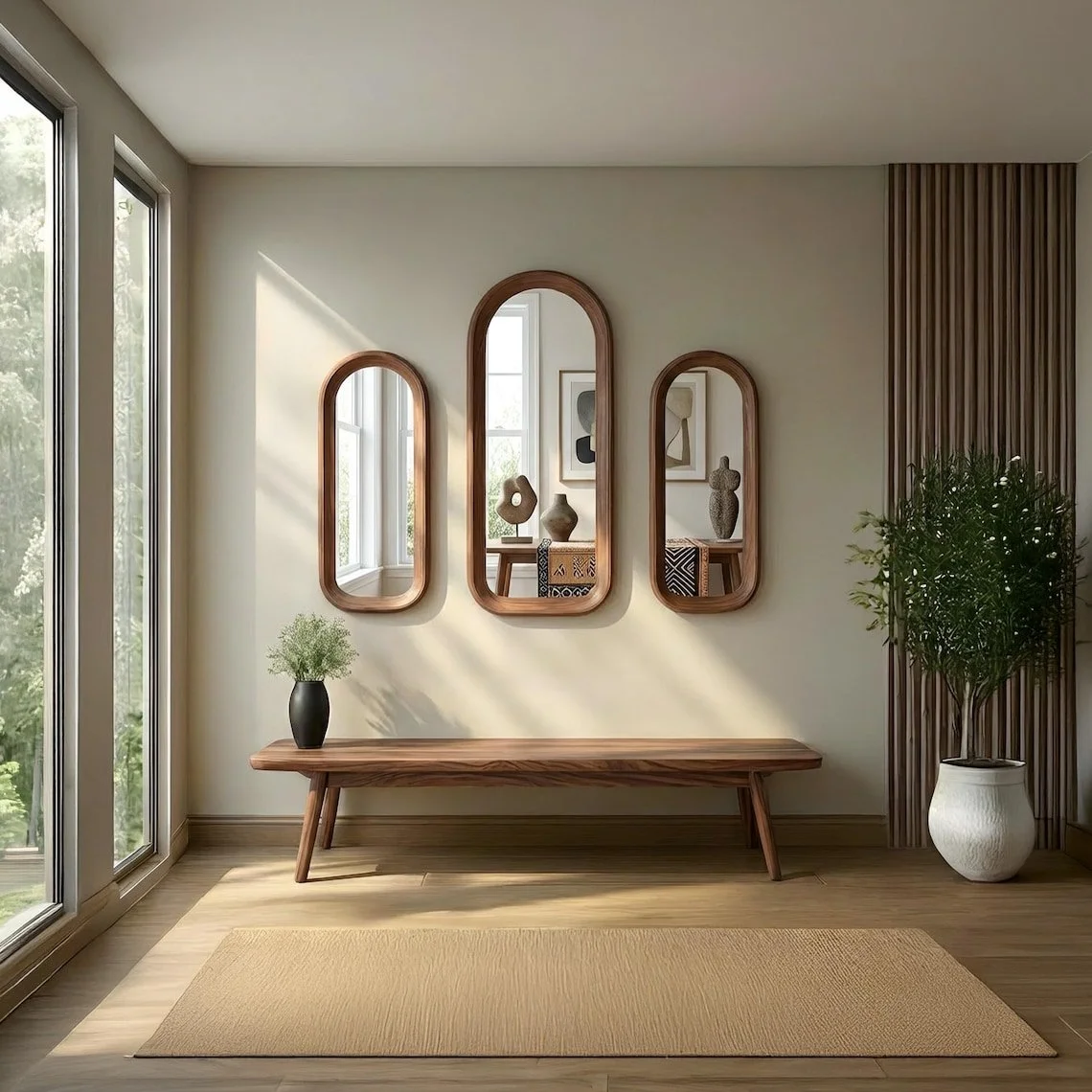
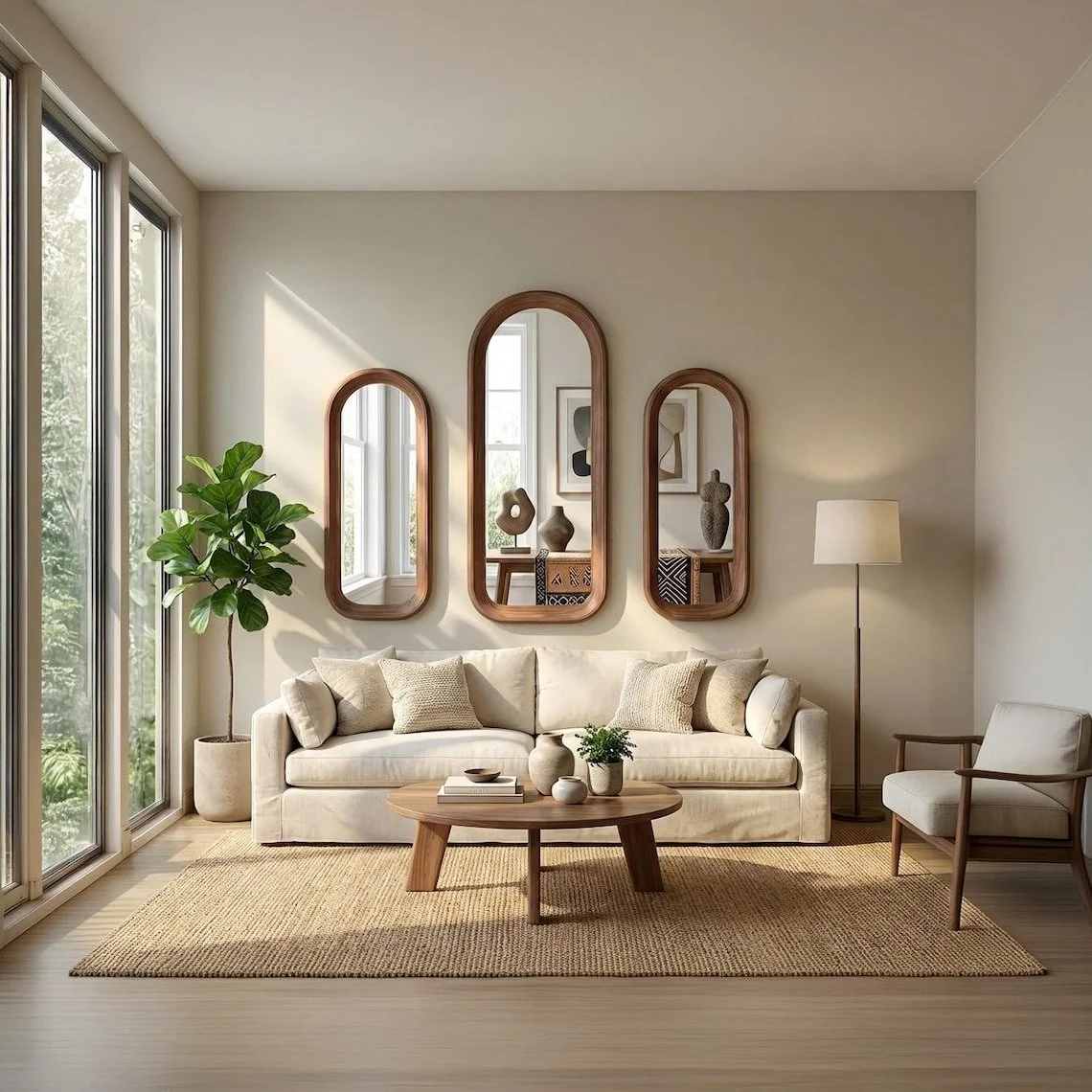
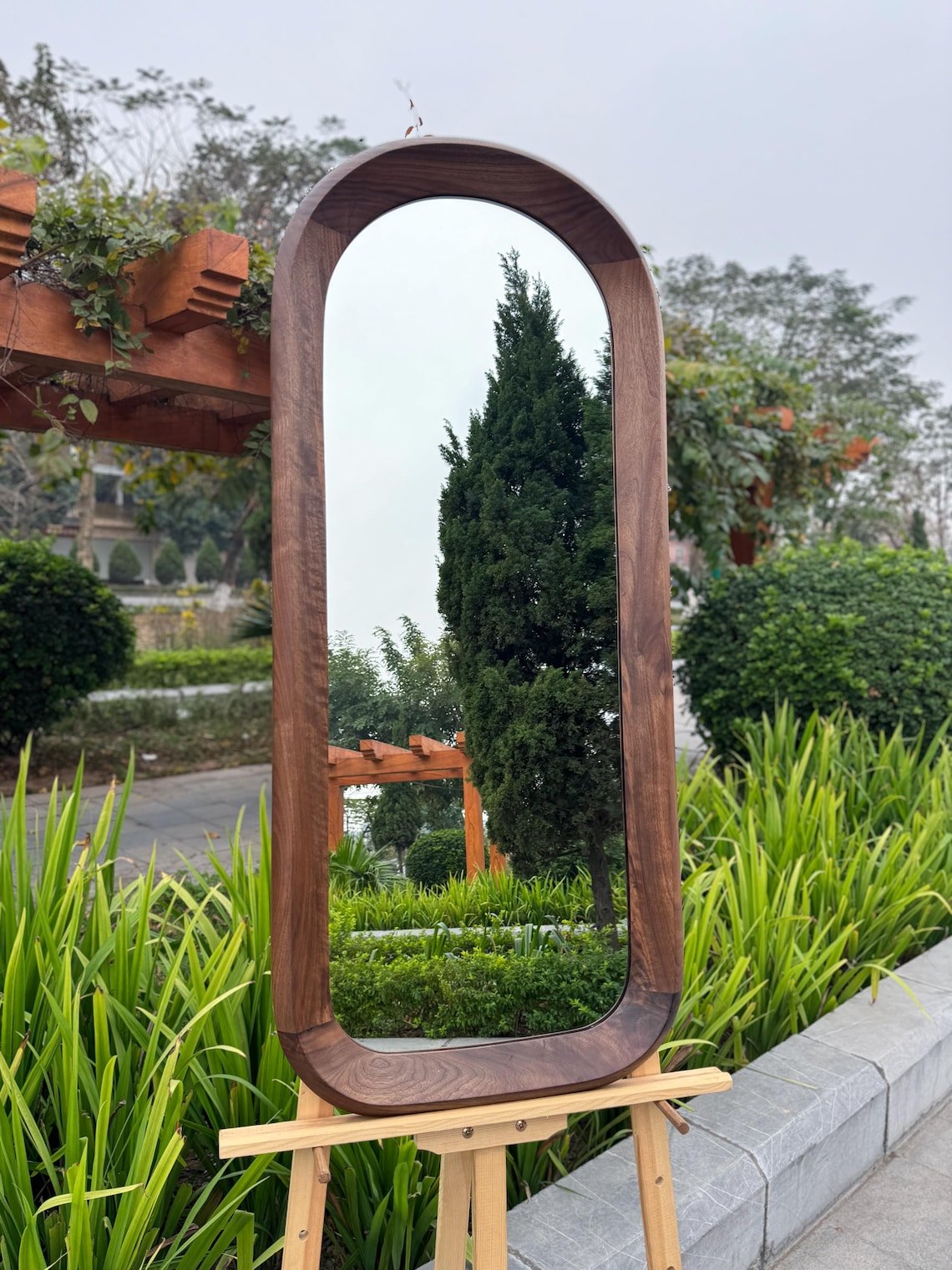
There is something particularly effective about using a mirror as more than a functional object. When its frame has enough character to stand on its own, the mirror begins to occupy the territory between everyday furnishing and wall art. The Handmade Walnut Decorative Mirror Set from VinawoodCrafts takes that approach with natural walnut wood, curved forms, and a deliberately handcrafted character.
Rather than relying on ornament or excessive decoration, the design draws attention to the relationship between the warm wood frame and the reflective surface. The result is a wall accent that can add structure, warmth, and a subtle sculptural quality to an interior.
The piece is listed by VinawoodCrafts, an Etsy shop focused on handmade walnut and oak mirrors. The shop identifies its work as handcrafted and describes its approach as combining natural wood with traditional woodworking methods.
What Makes This Piece Stand Out?
The defining characteristic is its balance between organic shape and natural material.
Walnut has a visual warmth that can be difficult to reproduce with painted or synthetic finishes. Its brown tones and visible grain give the frame a sense of variation, so the material contributes as much to the appearance as the shape itself. The mirror does not need elaborate decorative detailing to attract attention; the wood provides much of the visual interest.
The form also avoids the rigid geometry of a conventional rectangular mirror. The softer, more irregular profile creates a more relaxed presence on the wall and makes the piece feel closer to decorative art than to a purely utilitarian mirror.
This is particularly noticeable when the frame is allowed to breathe against a relatively quiet wall. A neutral background gives the walnut grain room to become the focal point rather than competing with it.
Visually, the combination is quite restrained: warm brown wood, reflective glass, and flowing contours. That restraint makes the set adaptable to interiors ranging from contemporary spaces to rooms with a stronger mid-century or organic-modern influence.
The Materials and Craftsmanship
The product is presented as a handmade walnut decorative mirror set, with a wooden frame forming the principal decorative element. The VinawoodCrafts shop describes its mirrors as handcrafted from natural walnut and says its makers use traditional woodworking methods. The shop also identifies Bac Tran as owner and designer, with additional makers involved in the woodworking process.
That handmade approach matters visually because natural wood does not behave like a perfectly uniform manufactured surface. Grain direction, tonal variation, and small differences in the material can contribute to the character of each piece.
The shop also notes that its mirror designs can be customized in size and that it offers solid walnut or oak options for its mirror work. Since configuration details can vary, the current product page should be checked for the exact options available with this particular listing.
The important point from an interior-design perspective is that the frame is not simply a border around the mirror. It is part of the artwork's visual identity.
How It Works With Different Interior Styles
Organic Modern
This is perhaps the most natural pairing. Organic-modern interiors tend to balance clean architecture with materials and shapes inspired by nature. Walnut provides the warmth, while the softer silhouette keeps the piece from feeling overly formal.
Pair it with linen upholstery, light oak furniture, stone surfaces, ceramic accessories, and a restrained neutral palette.
Mid-Century Modern
Walnut has a natural affinity with mid-century interiors, where warm timber tones and simple sculptural forms are often central to the aesthetic. The mirror can sit comfortably alongside walnut furniture, tapered-leg tables, vintage-inspired lighting, and muted upholstery.
The key is restraint. Let the wood remain visible rather than surrounding it with too many decorative accents.
Japandi
The organic quality of the frame can also work well in Japandi interiors, particularly when the rest of the room is calm and uncluttered.
Soft beige, warm white, muted gray, natural textiles, and simple wooden furniture can create an understated setting in which the mirror adds character without disrupting the room's sense of calm.
Contemporary and Minimalist Interiors
A minimalist room can actually make a warm wooden mirror more noticeable. Against a simple white, cream, taupe, or pale-gray wall, the frame becomes a concentrated point of texture.
This is especially effective when the surrounding furniture has clean lines and there are relatively few competing wall decorations.
Where Could You Display It?
Living Room
In a living room, the mirror can work as a decorative wall feature above a console, beside a sofa, or as part of a larger composition.
It can also help break up a wall that otherwise feels too uniform. Because the frame has an organic profile, it introduces visual movement without requiring a large gallery wall.
Entryway
An entryway is another particularly convincing location. Mirrors naturally make sense near an entrance, but a more sculptural frame gives the usual functional object greater decorative presence.
Pair it with a narrow console, a small ceramic vessel, a table lamp, or a restrained arrangement of greenery.
Bedroom
The warmth of walnut can be especially appealing in a bedroom, where natural materials tend to reinforce a quieter atmosphere.
Rather than placing the mirror in a highly decorated arrangement, consider giving it plenty of surrounding wall space. This allows the silhouette to read clearly and keeps the room feeling restful.
Dining Area
A mirror set can also be effective in a dining space, particularly against a plain wall near a wooden dining table. Reflections can introduce additional visual depth while the walnut frame helps connect the mirror with the furniture.
Here, warm timber, neutral upholstery, and soft ambient lighting would create a cohesive combination.
How to Style It
The easiest way to style a walnut mirror is to repeat its warmth without copying it too literally.
Wooden furniture is the obvious companion, but you do not need every element in the room to be the same wood tone. A walnut frame can sit beautifully alongside lighter oak, beige textiles, stone, ceramic, or woven materials.
For walls, warm neutrals are an easy starting point. Cream, off-white, greige, muted taupe, and soft gray all allow the brown tones of walnut to remain visually prominent.
Darker walls can create a more dramatic effect. Charcoal, deep green, or muted blue can provide stronger contrast with the warm wood, although the rest of the room should remain relatively controlled so the composition does not become visually heavy.
Lighting also deserves attention. Warm, indirect lighting can emphasize the wood's tonal variation and create a softer atmosphere around the mirror. Avoid placing an excessively bright light directly opposite it, as the reflection can become distracting rather than decorative.
Most importantly, leave some negative space around the piece. One of the strengths of an organic-shaped mirror is its silhouette. Crowding it with shelves, artwork, and accessories can weaken the effect.
Who Is This Piece For?
This mirror set is likely to appeal to someone who wants wall decor with a stronger connection to natural materials rather than something that feels purely decorative.
It suits interiors where wood grain, understated craftsmanship, and softer forms are already part of the visual language. It may also appeal to people who find standard rectangular mirrors too predictable but do not want an aggressively sculptural or highly ornamental alternative.
There is also something appealing about the flexibility of the design. The piece can contribute warmth to a minimalist room just as easily as it can complement an interior already built around wood, natural textures, and organic forms.
Final Thoughts
The Handmade Walnut Decorative Mirror Set succeeds because it keeps the design relatively simple while allowing material and shape to provide the personality.
The walnut frame introduces warmth and natural texture, while the organic profile softens the harder geometry commonly associated with wall mirrors. That combination gives the piece a distinctly decorative role without losing the practical function of a mirror.
For interiors built around natural wood, quiet neutrals, contemporary furniture, or organic-modern styling, it can become a subtle focal point rather than an overpowering statement. And perhaps that is its strongest quality: it does not need to dominate a room to make the wall feel more considered.
Some links on this page may be affiliate links. If you make a purchase through one of these links, we may earn a small commission at no extra cost to you.
