
Walnut Asymmetrical Mirror: Where Organic Form Meets Modern Interior Design
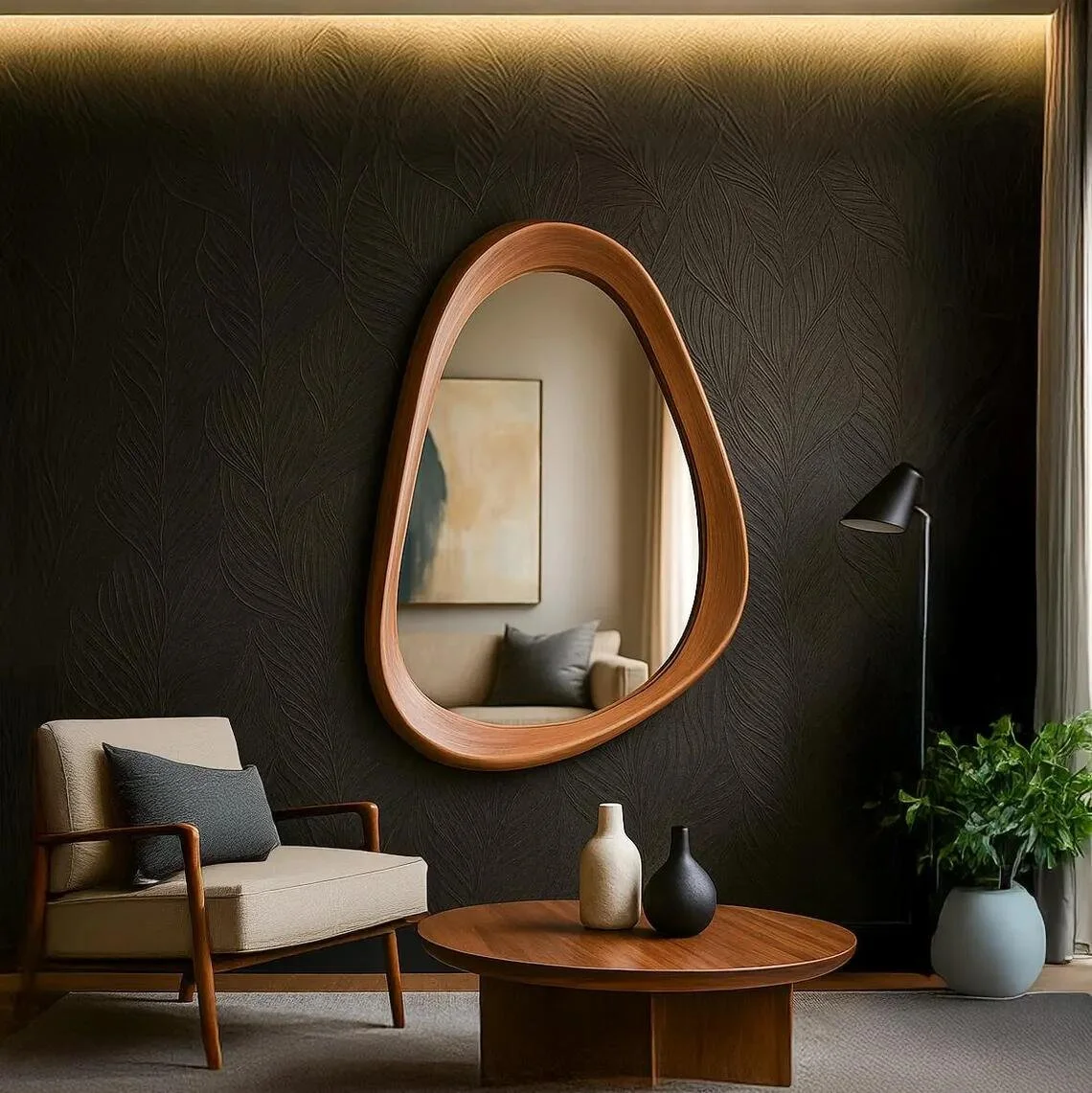
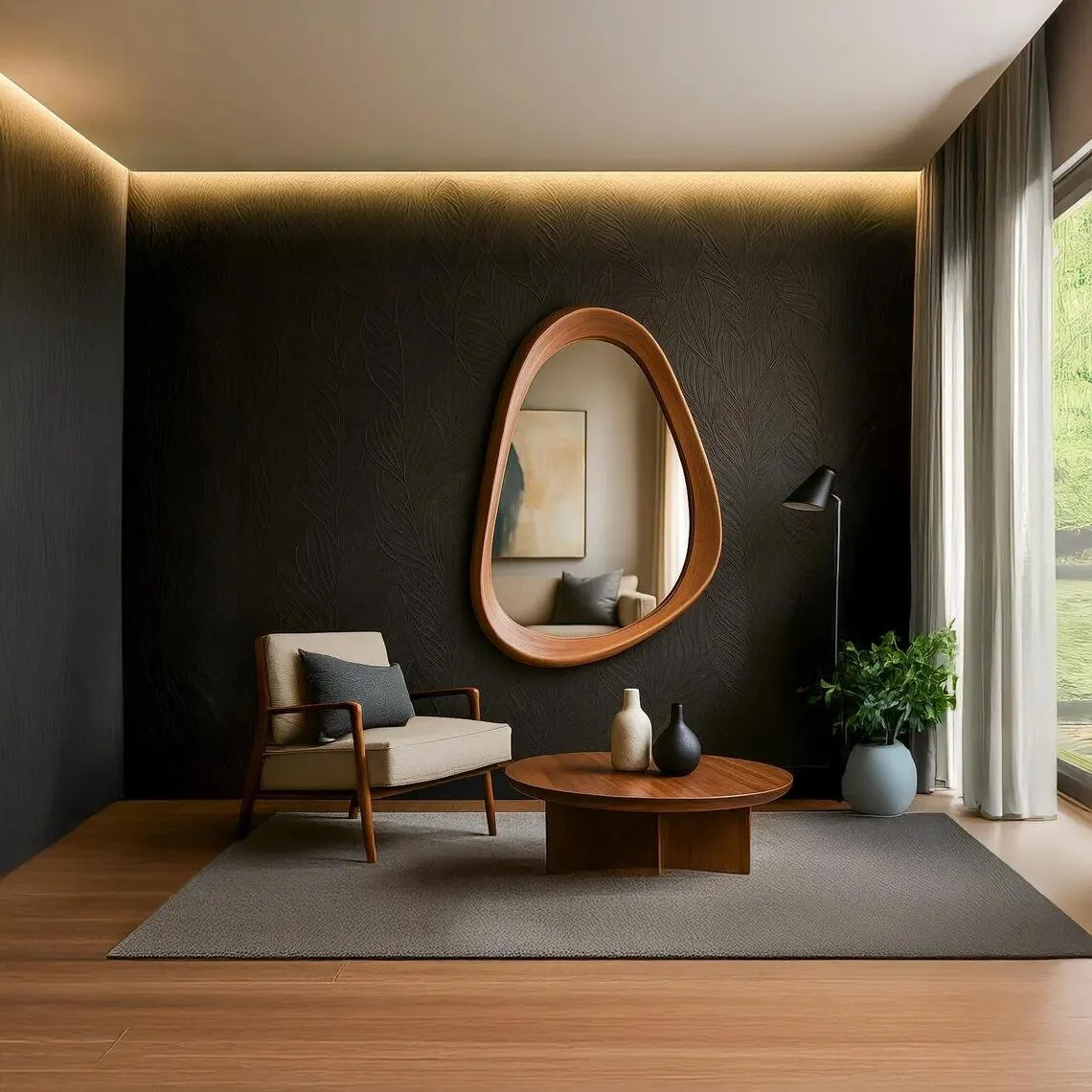
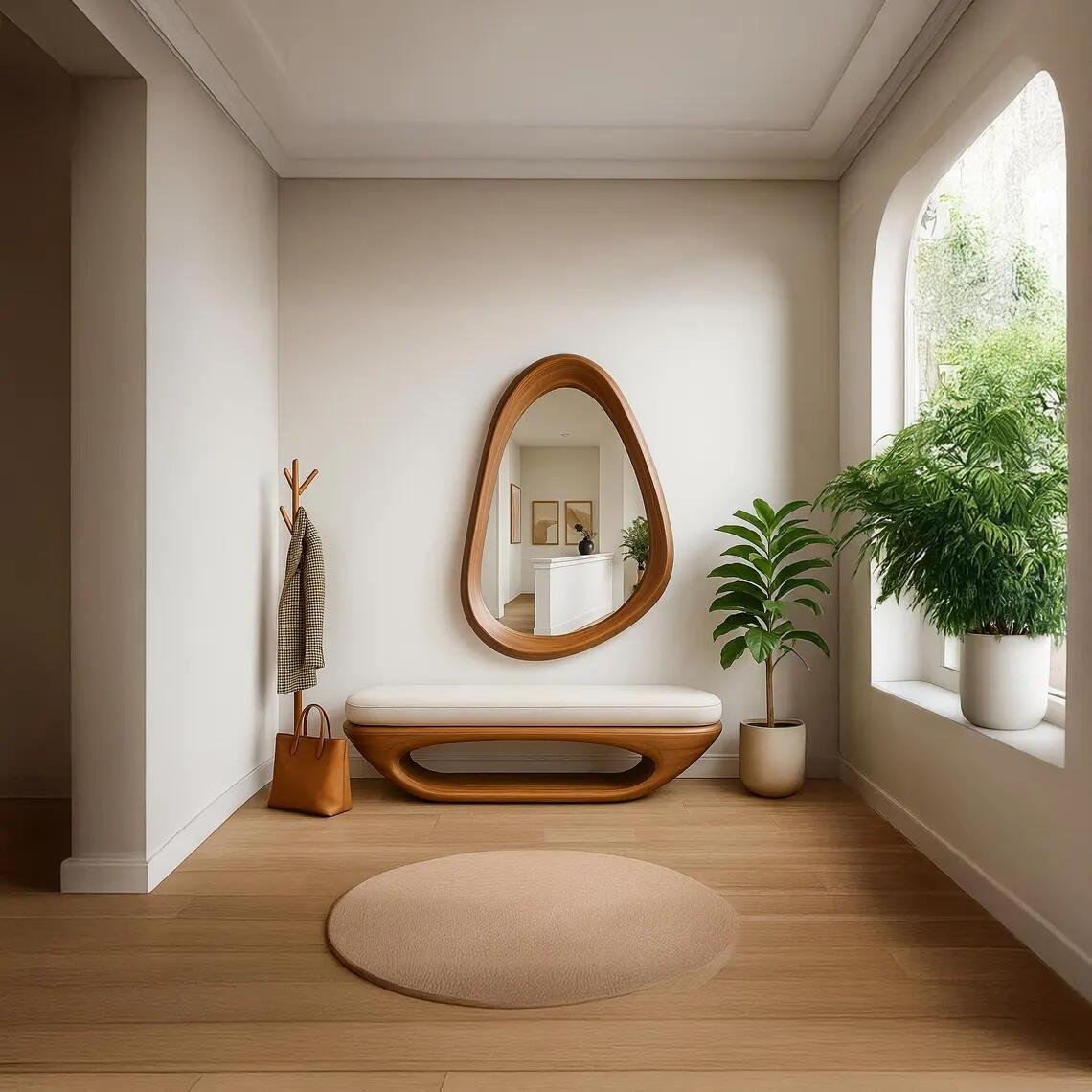
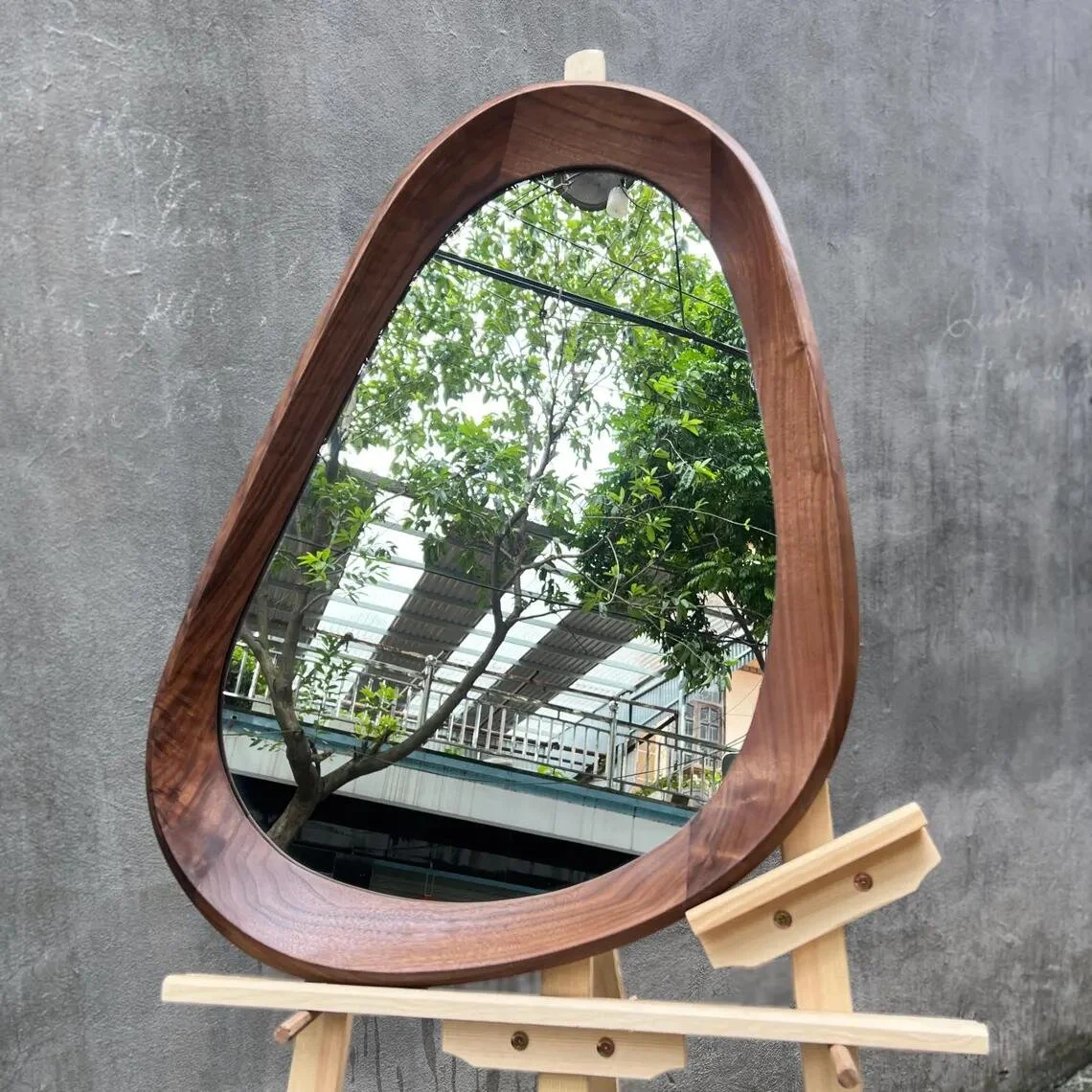
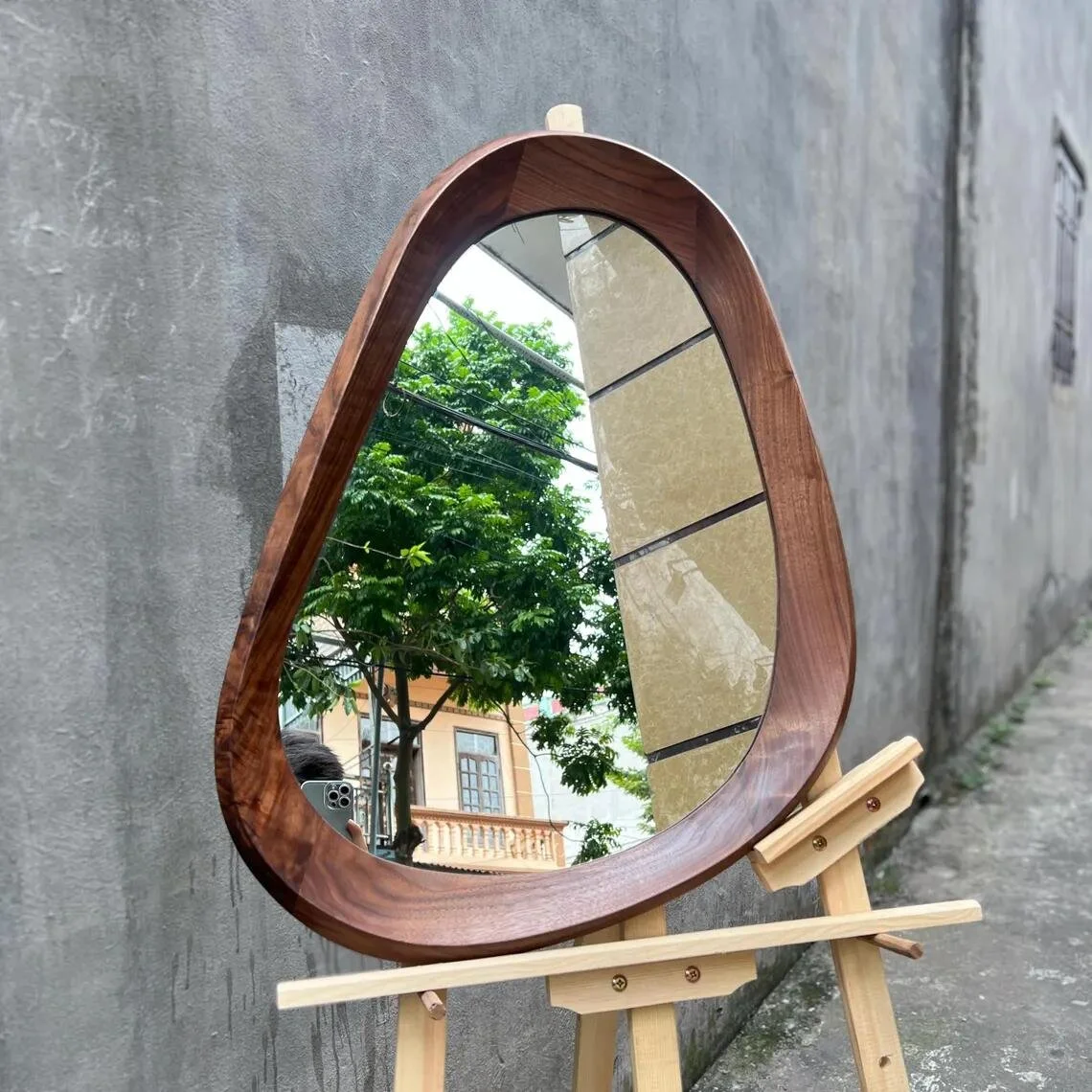
There is something quietly compelling about an object that refuses to follow a familiar shape. The Walnut Asymmetrical Mirror – Organic Modern Wall Art & Decor takes a functional household object and gives it a distinctly sculptural presence, replacing the predictability of a rectangle, circle, or oval with a flowing silhouette that feels closer to something found in nature.
Listed by VinawoodCrafts, the mirror is presented as a handmade design crafted from walnut wood and mirror, with the seller emphasizing the natural character of the solid wood and its individual grain. The listed design is shown at 105 × 75 cm, while additional size options and custom dimensions are available.
What makes the piece particularly interesting from an interior-design perspective is the tension between its organic outline and its darker, more structured wooden frame. It can function as a mirror, but visually it behaves much like a piece of wall sculpture.
What Makes This Piece Stand Out?
The defining feature is its asymmetrical, organic form. Instead of relying on straight edges or perfect symmetry, the silhouette moves through a series of soft curves and irregular contours. The result is a shape that naturally attracts the eye without needing a complicated decorative pattern.
That distinction matters in a modern interior. Many contemporary rooms already contain strong horizontal and vertical lines: sofas, cabinets, doors, windows, shelving, and architectural details. An irregularly shaped mirror introduces a different visual rhythm, breaking up that repetition without making the room feel busy.
The color is equally important. The walnut frame shown in the product imagery has a deep, warm brown presence, while the reflective surface adds light and visual openness. The contrast between dark wood and reflected space gives the piece more depth than a conventional framed mirror.
There is also a subtle sense of movement in the design. The curves can be read almost like a softened natural contour—something between a water-worn stone, a droplet, or the irregular edge of a natural landscape. The seller itself describes the forms as being inspired by elements such as water droplets, tree rings, and river stones.
From a purely visual perspective, that makes the mirror especially effective in rooms where the goal is to combine contemporary structure with warmer, more organic elements.
The Materials and Craftsmanship
The listing identifies walnut wood and mirror as the primary materials and states that the designs are made from solid walnut or oak wood and finished with natural hardwax oil intended to enhance the wood's original color and grain. The seller also describes the mirrors as handmade by skilled artisans.
This is one of the strongest aspects of the design because the wood is not merely a border around the reflective surface. It plays an important part in the visual identity of the piece.
Natural wood grain introduces variation that a uniformly manufactured frame cannot easily reproduce. According to the listing, the grain and texture of the solid wood vary from piece to piece, meaning each mirror has its own individual character.
The listed depth is 1.77 inches, giving the frame enough physical presence to read as a substantial object on the wall rather than simply a thin reflective panel.
Another useful detail is the degree of customization offered. The seller allows customers to request custom dimensions, alternative wood types, and personalized color finishes. The listing also provides multiple size options rather than presenting the displayed dimensions as the only configuration.
For interiors, that flexibility can be particularly useful because an asymmetrical design depends heavily on proportion. A shape that works beautifully above a compact console will have a very different effect when scaled up for a large living-room wall.
How It Works With Different Interior Styles
The strongest stylistic connection is clearly Organic Modern. The combination of clean contemporary surroundings, natural wood, and an irregular silhouette fits comfortably into interiors that aim for balance rather than strict minimalism.
It can also work particularly well with Contemporary spaces. In a room dominated by modern furniture, the curved outline provides contrast against sharper architectural geometry. A neutral sofa, low-profile console, stone surfaces, and restrained accessories would allow the mirror's shape to remain visually important without overwhelming the room.
There is also a natural relationship with Japandi-inspired interiors. Japandi spaces often depend on simple forms, tactile materials, muted palettes, and a carefully controlled sense of imperfection. The dark wood and organic contour of this mirror can complement those characteristics without requiring a heavily decorated environment.
For Scandinavian interiors, the piece would be more successful when balanced with lighter woods, warm neutrals, and plenty of negative space. Its darker walnut appearance can provide a grounding element, especially in a pale room.
It may also suit a restrained Rustic Modern aesthetic, particularly when paired with natural timber, linen, stone, leather, or ceramics. The key is restraint: the mirror already brings texture and visual personality, so the surrounding decor does not need to compete with it.
Where Could You Display It?
The product listing itself presents the mirror as suitable for living rooms, bedrooms, hallways, kitchens, bathrooms, and dining areas.
Of those possibilities, the living room is perhaps the most visually interesting. A large asymmetrical mirror can occupy a wall above a console, sideboard, or low cabinet and act as a focal point without looking like a conventional piece of framed artwork.
An entryway is another natural choice. This is where the mirror's functional quality becomes especially useful. Its organic shape can turn a practical everyday item into part of the room's design language. The seller's imagery also shows the mirror used in an entryway setting alongside a wooden bench and other warm, neutral elements.
In a bedroom, the mirror could work above a dresser or on a relatively quiet wall where its irregular form becomes a decorative feature. Here, softer textiles and warm lighting would help prevent the darker wood from feeling too heavy.
A dining area could also benefit from the reflective surface, especially when the surrounding furniture is simple. The mirror can introduce another layer of light and visual depth without requiring additional artwork.
How to Style It
The easiest way to style this mirror is to let its natural shape breathe.
Because the silhouette is already visually distinctive, surrounding it with too many competing shapes can reduce its impact. A simple console, sideboard, or bench beneath it is often enough.
For color, warm neutrals are an obvious starting point: cream, beige, taupe, soft gray, and natural wood tones can reinforce the warmth of the walnut frame. Dark charcoal or black accents can create a more dramatic, contemporary composition.
Lighting also deserves attention. Soft, indirect illumination can emphasize the wood grain while allowing the mirror itself to catch ambient light. A nearby table lamp, floor lamp, or natural window light can make the piece feel more dimensional throughout the day.
Plants are another useful companion. Greenery introduces an organic color against the darker wood and reinforces the natural character of the design without creating visual competition.
Most importantly, leave some negative space around the mirror. An asymmetrical object benefits from breathing room because its irregular outline is part of the composition. Crowding it with multiple frames or accessories can make the wall feel unnecessarily fragmented.
Who Is This Piece For?
This mirror is especially appealing to someone who sees wall decor as more than a final decorative layer.
It suits a design sensibility that appreciates natural materials, imperfect symmetry, tactile surfaces, and objects with a strong silhouette. It may be particularly attractive to homeowners who like contemporary interiors but find conventional geometric furniture and decor a little too rigid.
It is also a thoughtful option for someone who wants a mirror to contribute to the identity of a room rather than simply perform a practical function. The combination of reflective surface, natural wood, and sculptural form allows it to sit somewhere between functional furniture and wall art.
For people who prefer highly symmetrical, traditional, or ornate interiors, the piece may feel less natural. Its appeal comes from simplicity, asymmetry, and the relationship between organic form and modern surroundings.
Final Thoughts
The Walnut Asymmetrical Mirror succeeds because it does not try to separate function from visual character. Its irregular outline gives it the presence of a sculptural wall object, while the walnut frame adds warmth and natural variation that help soften contemporary spaces.
What makes it especially versatile is not an elaborate decorative treatment, but the balance between a relatively simple material palette and a more expressive silhouette. In the right room, it can become the element that connects hard architectural lines with softer, more natural forms.
For interiors built around warm wood, neutral colors, modern furniture, and thoughtful negative space, this is the kind of mirror that can quietly become a central part of the room's visual language.
Some links on this page may be affiliate links. If you make a purchase through one of these links, we may earn a small commission at no extra cost to you.
