
Brown Stoneware Sculptural Mirror: When Ceramic Becomes Architectural Wall Art
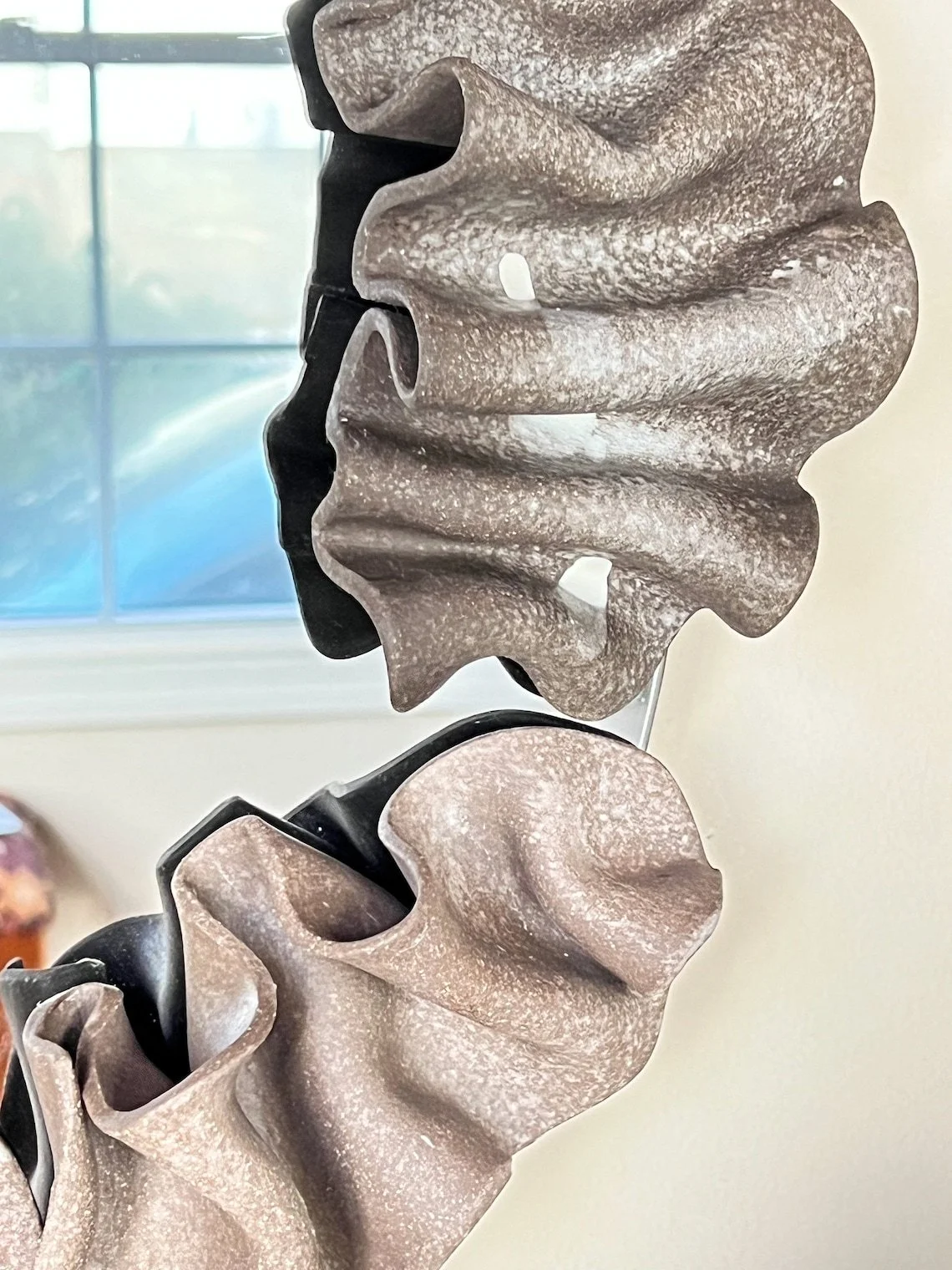
Some mirrors are designed to disappear into a room, quietly reflecting light and extending a sense of space. Others do almost the opposite: they announce themselves as objects of visual interest. This brown stoneware sculptural mirror belongs firmly in the second category.
Listed by AsmaaAmanTranArt on Etsy, the piece combines a circular reflective surface with an irregular, heavily textured ceramic surround shaped by hand. Rather than relying on a conventional frame, the design turns folded ceramic forms into the main decorative feature, giving the mirror the character of both functional object and wall sculpture.
Its appeal comes from that tension between usefulness and expression. The mirror remains visually recognizable and practical, but its frame introduces movement, texture, shadow, and a distinctly handmade presence.
What Makes This Piece Stand Out?
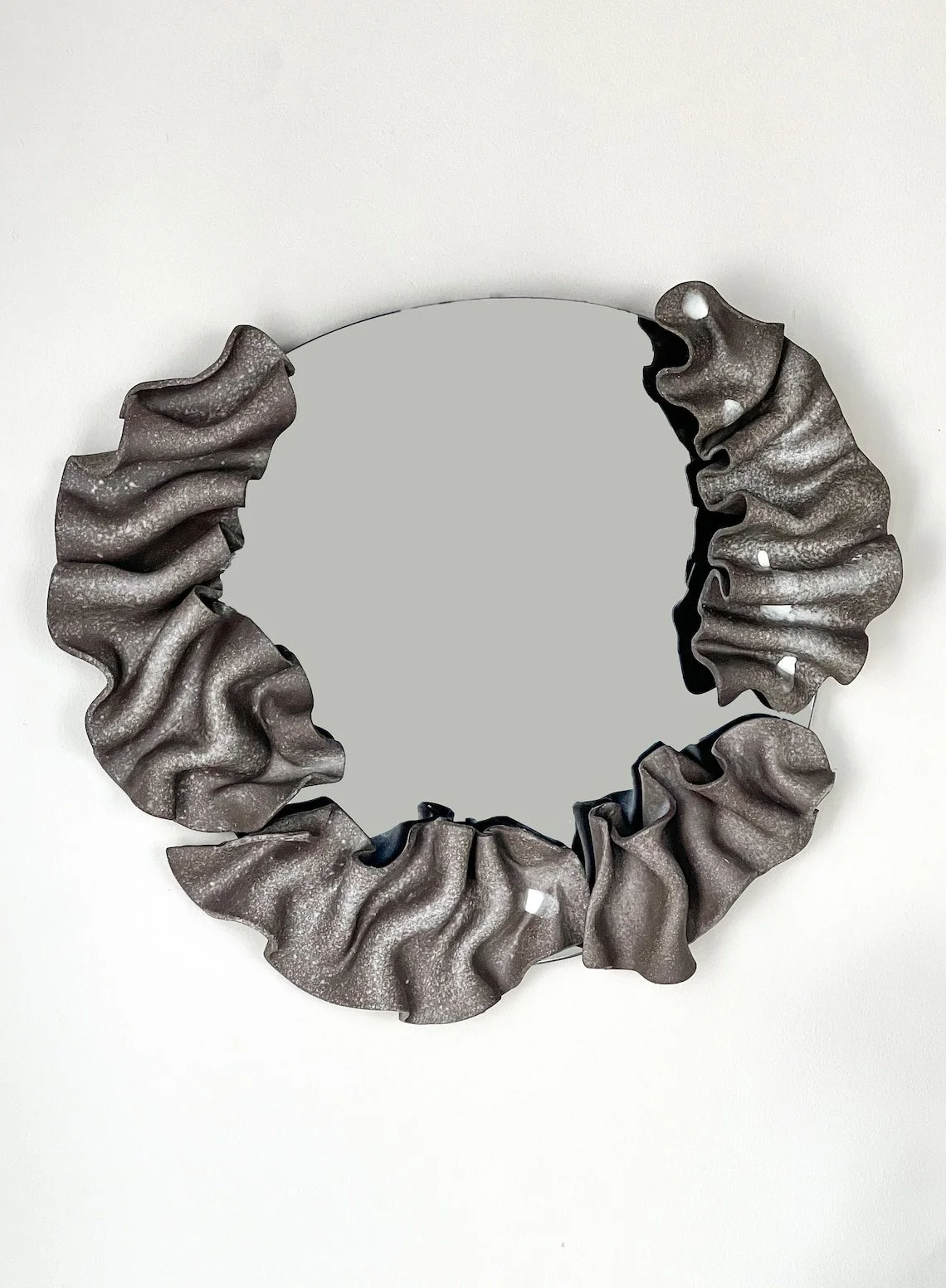
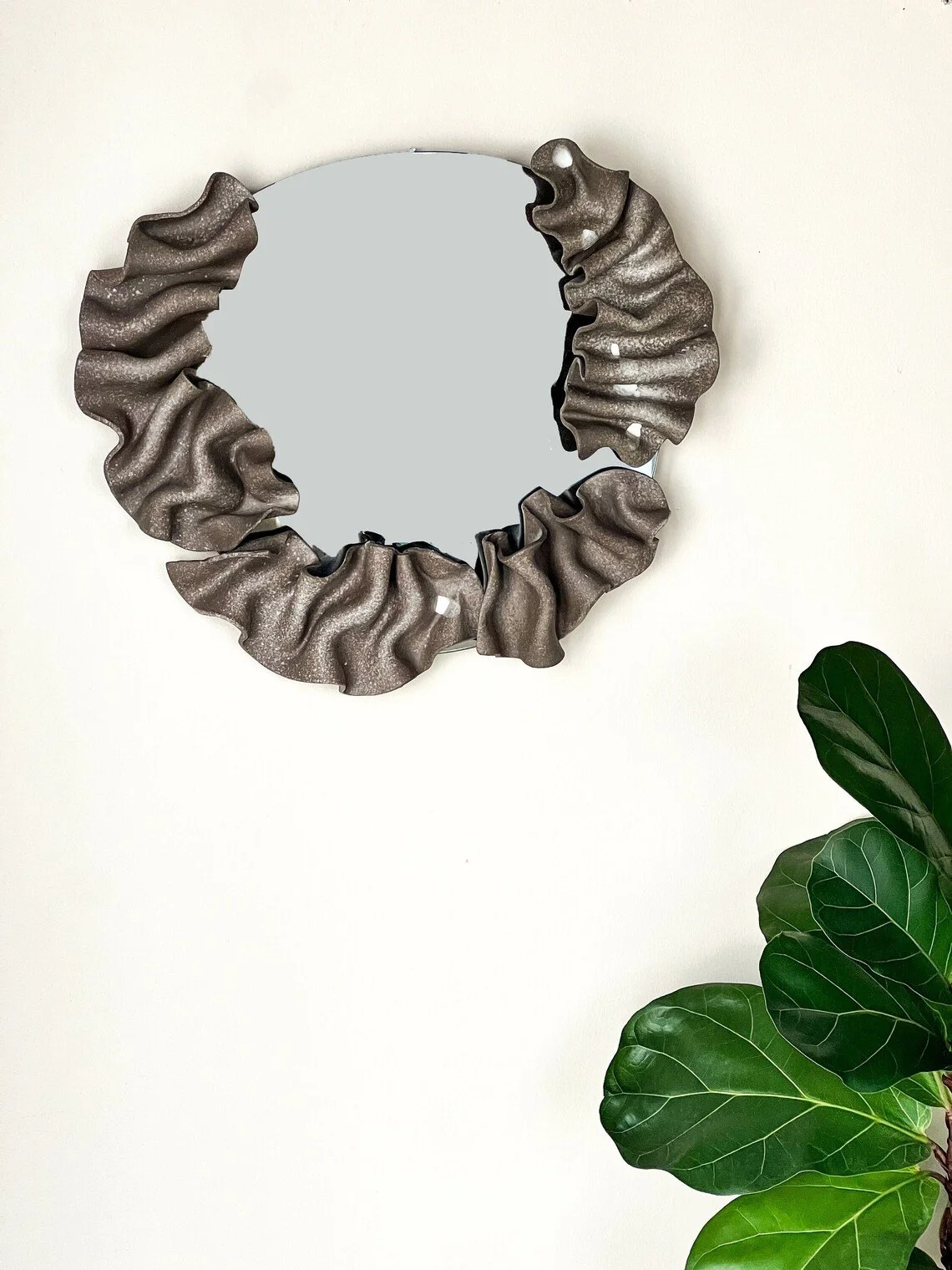
The most striking element is the frame. Instead of following a smooth geometric outline, the stoneware is formed into a series of broad, folded shapes that appear almost textile-like. The seller describes these folds as being shaped to resemble fabric, while the irregular construction creates changing shadows across the surface.
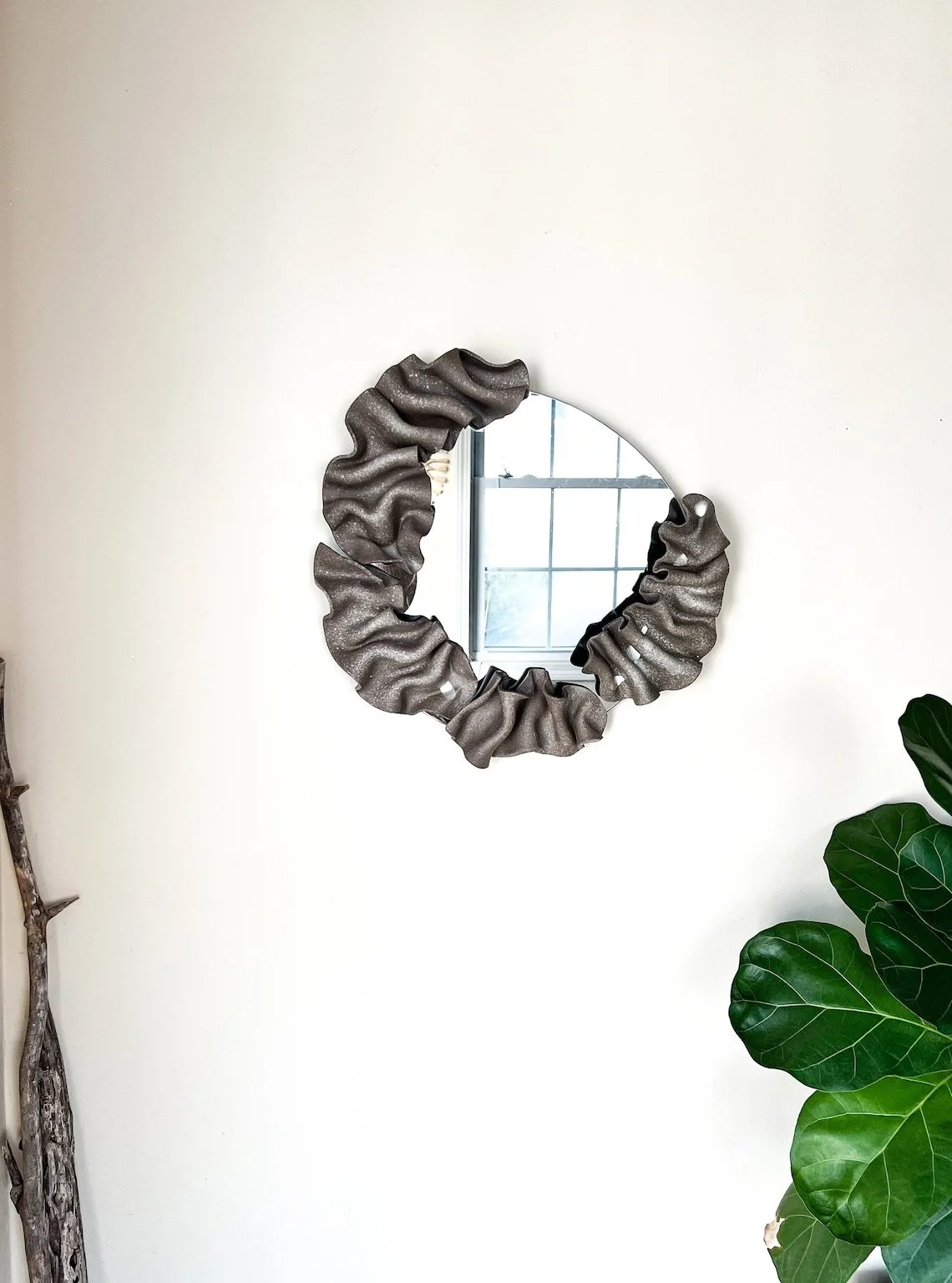
That detail matters because the piece is not dependent on color alone to attract attention. Its visual language is largely three-dimensional. Viewed from straight on, the folds create an organic border around the mirror. Viewed at an angle, they introduce additional depth and shadow, making the frame feel more sculptural.
The overall composition is also deliberately asymmetric in character. Although the central mirror is rounded, the surrounding ceramic does not behave like a perfectly controlled circular frame. The uneven edges give the object a softer, more natural rhythm.
Visually, the effect sits somewhere between pottery, textile sculpture, and wall decor. That makes the piece especially interesting for interiors where materials and silhouettes are given as much importance as color.
The Materials and Craftsmanship
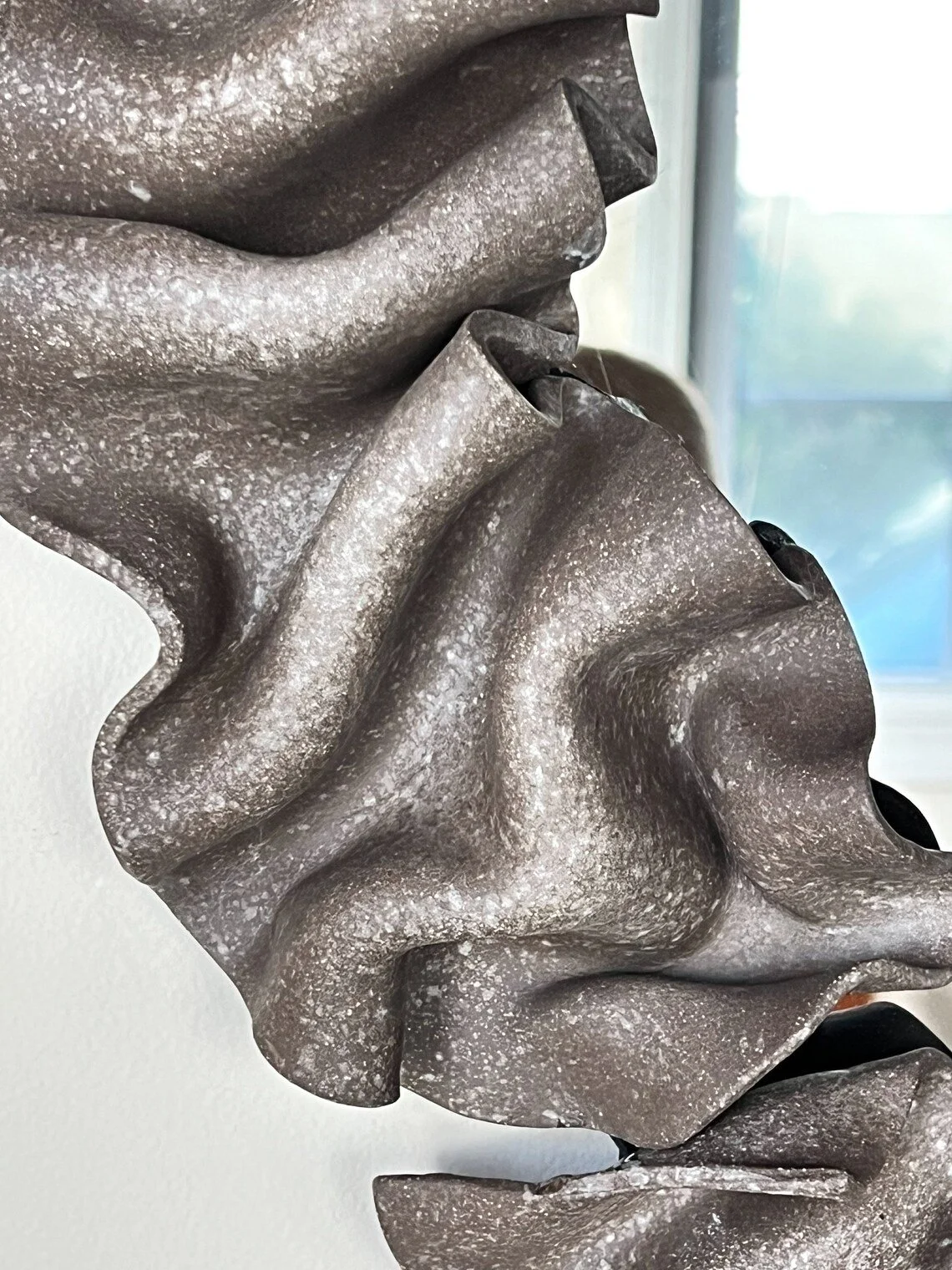
The listing identifies stoneware, glass, and felt backing among the materials. The seller further describes the piece as handbuilt from rich dark brown stoneware, finished with a white clay-slip splatter, and fired at high temperature in a home kiln. The description also notes that the frame is shaped organically by hand and that no two will ever be exactly the same.
That handmade process is visible in the object itself. The folds do not read like a repetitive industrial pattern. Their spacing, thickness, and contours vary enough to preserve a sense of movement.
The surface treatment is another important part of the aesthetic. The dark brown body is interrupted by lighter speckled marks, producing a weathered, earthy appearance rather than a perfectly uniform finish. In close-up photographs, the combination of raised folds and mottled surface gives the ceramic a tactile quality that becomes part of the visual experience.
The listing gives the current piece dimensions as approximately 17 inches wide, 15 inches high, and 3 inches deep, while also noting that custom sizes can be requested from the seller. It can be hung in different positions, which adds some flexibility when considering the composition of a wall.
How It Works With Different Interior Styles
This mirror has a strong organic-modern character, but it does not need to be placed inside one narrowly defined decorating style.
In an Organic Modern interior, its earthy ceramic surface can reinforce a palette built around wood, stone, linen, plaster, and other tactile materials. A warm oak console or a simple natural-wood bench would provide a particularly convincing backdrop.
It can also work within Wabi-Sabi-inspired spaces, especially where irregularity and visible handmade qualities are appreciated. The imperfect-looking folds and variations in the ceramic surface complement interiors that favor natural materials over highly polished finishes.
For Japandi rooms, the key would be restraint. Rather than surrounding the mirror with many decorative objects, give it breathing room and pair it with simple furniture, pale timber, muted textiles, and a limited palette.
A Contemporary interior could take a different approach. Against a clean wall with streamlined furniture, the sculptural frame becomes a deliberate textural contrast. Here, the mirror works almost like an art object interrupting an otherwise controlled composition.
It could also sit comfortably in a more relaxed Bohemian setting, particularly alongside earthy textiles, ceramics, woven materials, and greenery. The important factor is balance: the mirror already provides substantial texture, so the surrounding decor does not need to compete with it.
Where Could You Display It?
Living Room
The living room is perhaps the most natural setting when the intention is to treat the mirror as wall art. Hung above a low console, sideboard, or quiet section of wall, it can act as a focal point without relying on a traditional framed-art composition.
Because the frame already has strong visual movement, leaving some surrounding wall space relatively open would help preserve its impact.
Entryway
An entryway can benefit from artwork that combines function with personality, and this piece does both. Its reflective surface makes sense near an entrance, while the sculptural frame gives the space a more curated appearance.
A narrow console, a ceramic vessel, and one or two restrained decorative objects would be enough. There is little need to build a crowded arrangement around it.
Bedroom
In a bedroom, the mirror could soften an otherwise minimal composition. It would work particularly well above a simple dresser or on a wall where natural textures—linen bedding, timber, woven materials, or plaster-like finishes—already play a role.
Here, softer lighting would allow the raised ceramic forms to create subtle shadows rather than making the piece feel overly dramatic.
Home Office
A home office with contemporary furniture can sometimes feel visually rigid. The organic shape of this mirror introduces a more tactile element without requiring bright color or elaborate decoration.
Placed on a clean wall behind a desk or in a secondary visual zone, it could help prevent the room from feeling purely functional.
How to Style It
The easiest way to style this mirror is to treat its materials as the starting point rather than trying to match its exact color.
Warm neutrals such as cream, sand, taupe, beige, and soft brown would naturally complement the dark stoneware. Off-white walls can provide useful contrast, allowing the irregular silhouette to remain clearly visible.
For furniture, woods with visible grain can reinforce the handmade character of the ceramic. Light oak would create a softer, Scandinavian-influenced combination, while darker timber could produce a moodier and more grounded result.
Lighting is equally important. Directional or side lighting can emphasize the folds and create shadows across the frame, making the sculptural surface much more noticeable. In contrast, very flat lighting may reduce some of the dimensional effect that makes the piece interesting.
Perhaps the most useful styling principle is simply to give it room. The mirror does not need a gallery wall around it. Its irregular frame already supplies considerable visual information, and negative space can make that complexity easier to appreciate.
Who Is This Piece For?
This mirror will likely appeal most to someone who sees wall decor as more than a way to fill an empty wall.
It suits a design sensibility that values handmade objects, tactile materials, irregular forms, and understated earthy color. Rather than looking for a conventional round mirror with a predictable border, the ideal admirer is more likely to appreciate the relationship between function and sculpture.
It may also appeal to people who prefer interiors that feel collected and material-driven rather than heavily coordinated. The piece has enough individuality to become part of the room's identity without depending on bright color or an elaborate decorative theme.
Final Thoughts
The brown stoneware sculptural mirror succeeds because it makes texture the central design language. The reflective surface is useful, but the surrounding ceramic gives the object its personality.
Its dark brown stoneware body, lighter speckled surface, hand-formed folds, and irregular silhouette create an artwork that can bring visual depth to relatively quiet interiors. The result feels especially appropriate for spaces built around natural materials, restrained color palettes, and an appreciation for craftsmanship.
Rather than functioning simply as a mirror with an unusual frame, it reads as a small piece of ceramic architecture for the wall—an object designed to be noticed not only for what it reflects, but for the physical form that surrounds the reflection.
Some links on this page may be affiliate links. If you make a purchase through one of these links, we may earn a small commission at no extra cost to you.
