
Green Abstract Wildflower Oil Painting: A Garden-Inspired Study in Color and Texture
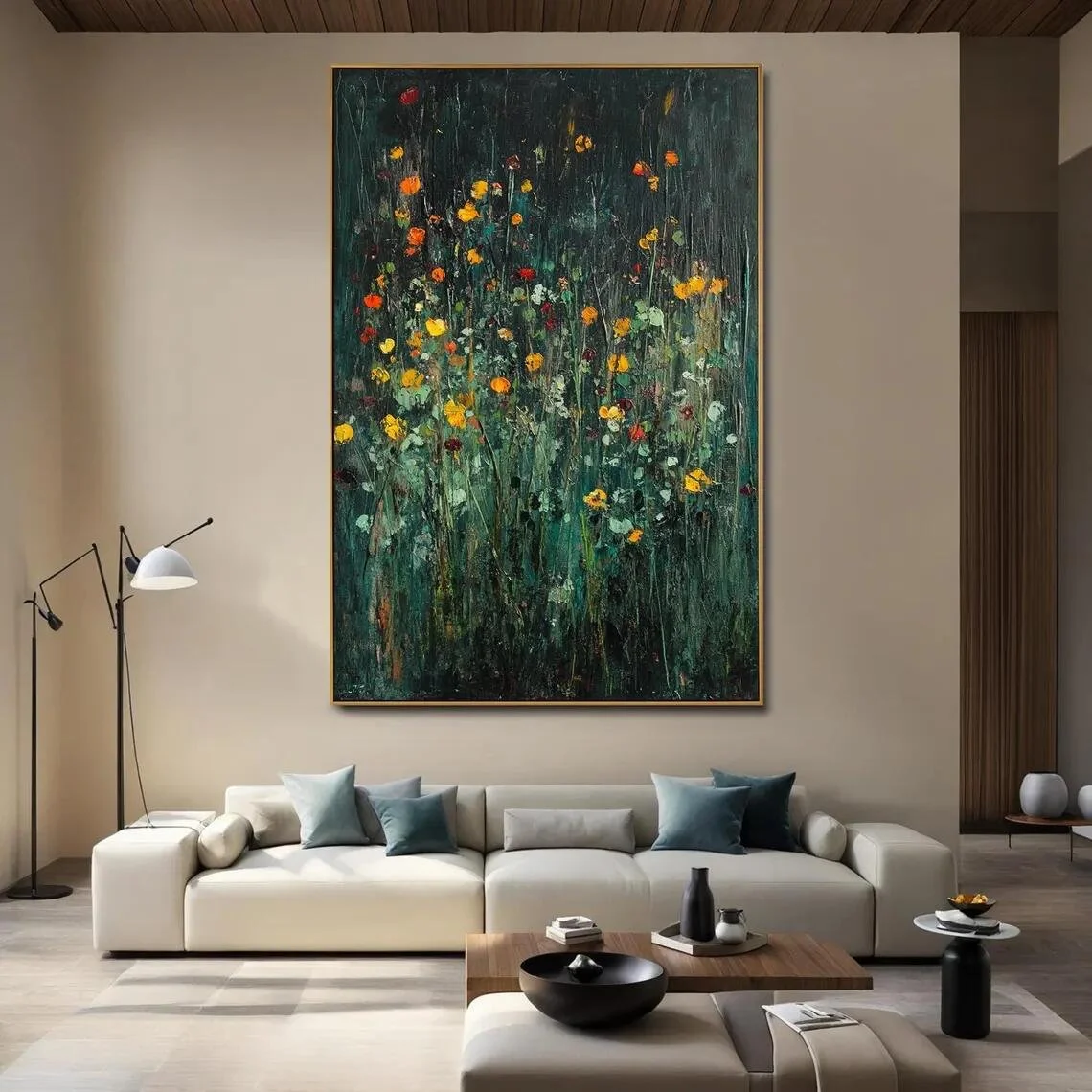
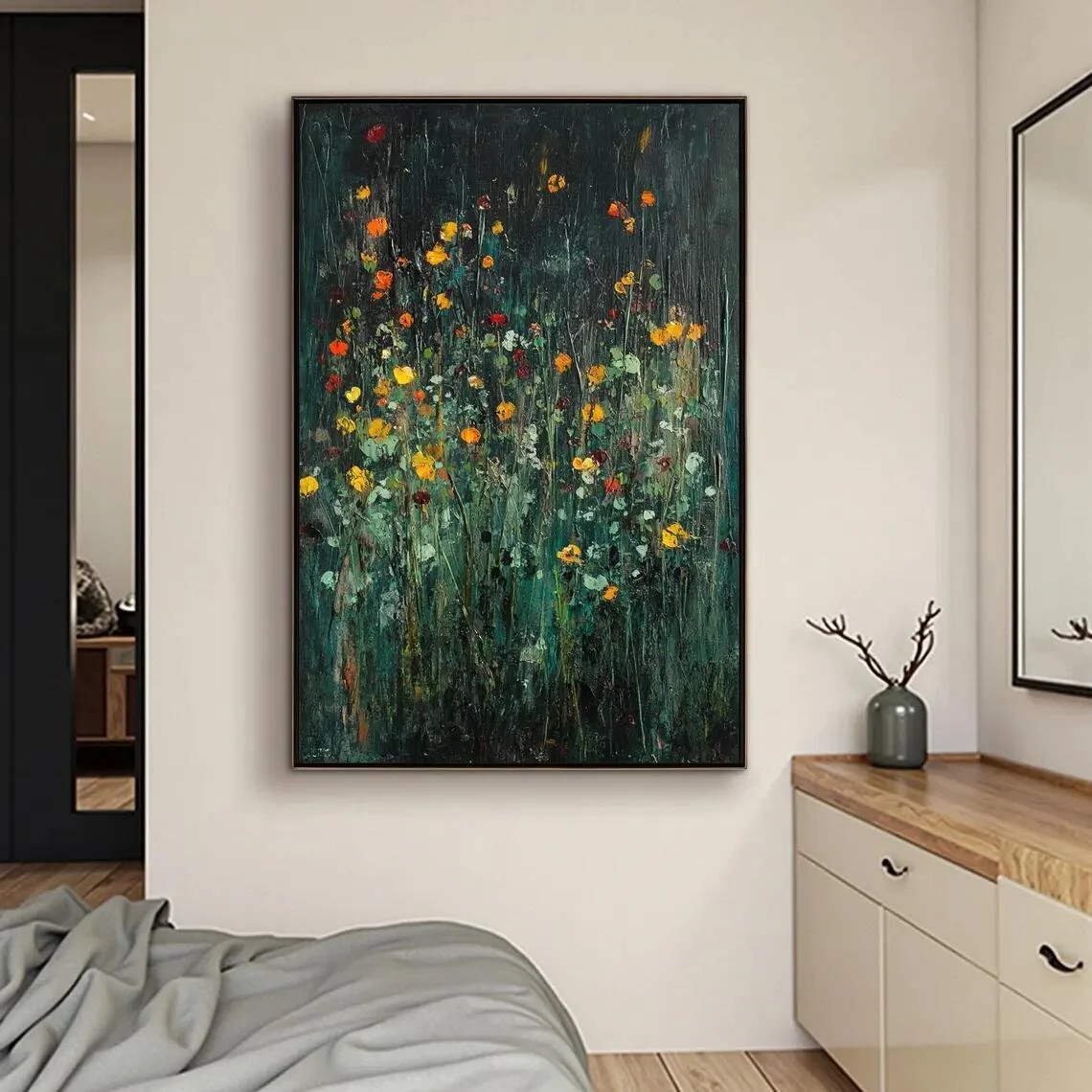
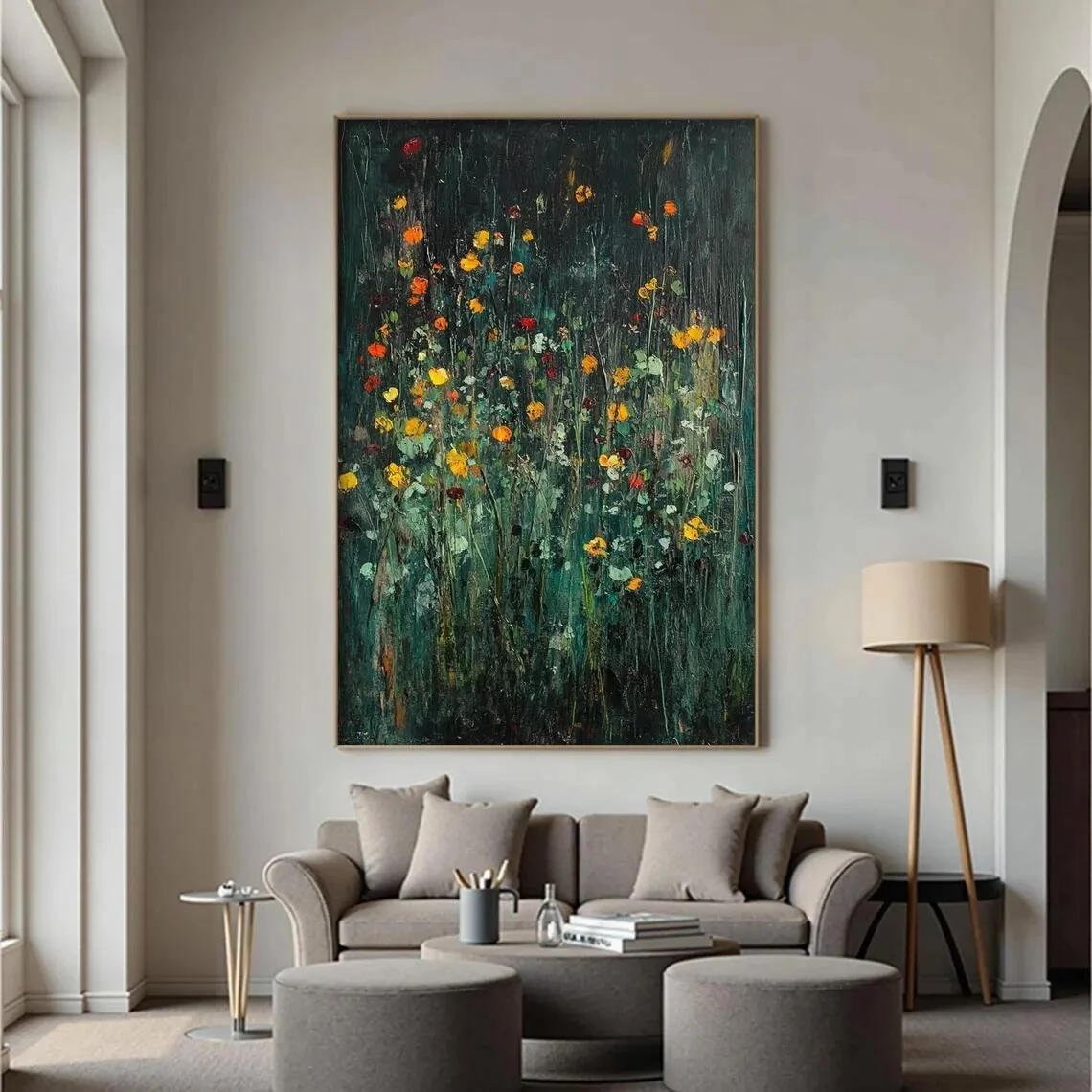
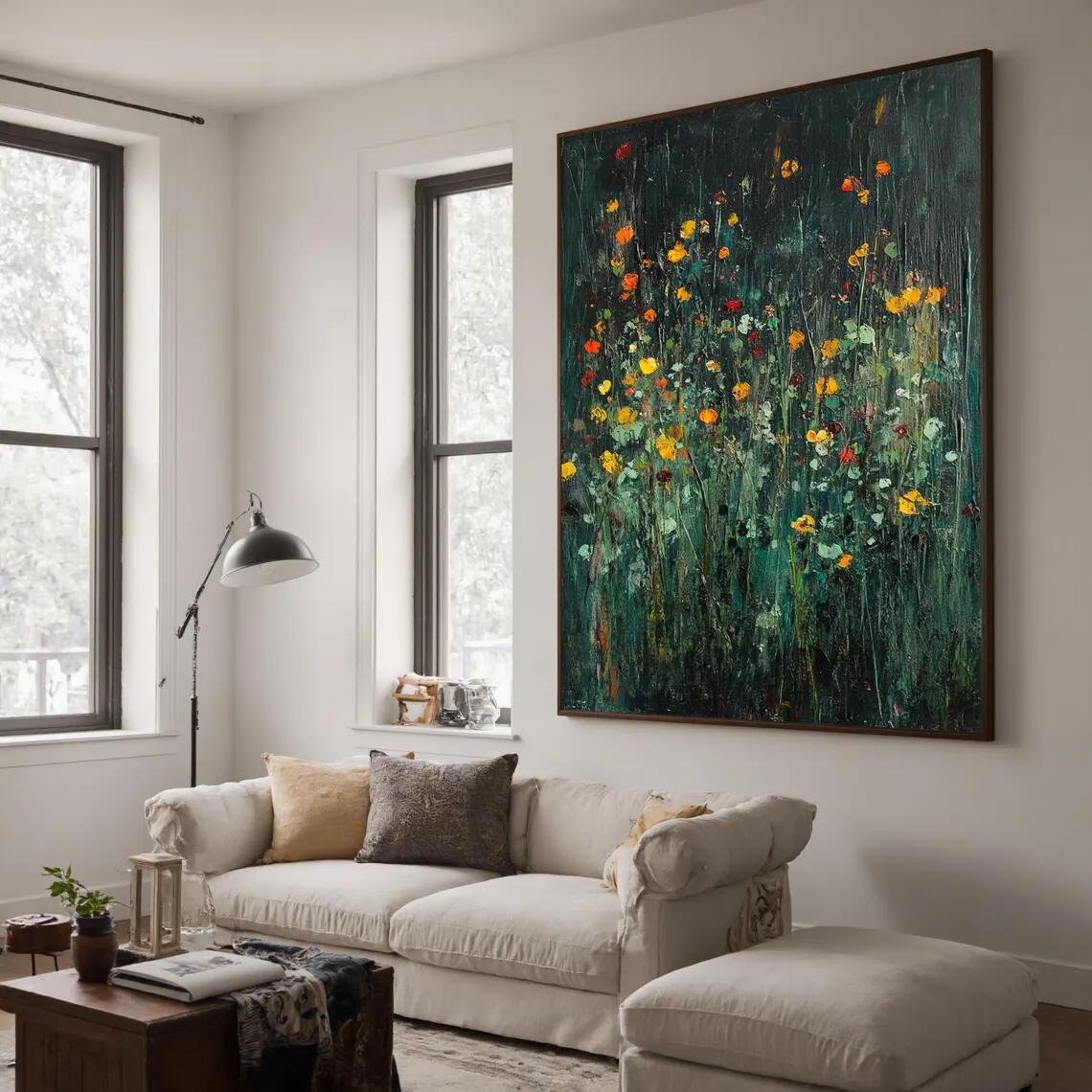
There is something especially compelling about floral painting when it stops trying to describe every flower literally. Rather than presenting a carefully arranged bouquet or a botanically precise study, this green abstract wildflower painting approaches the garden as an atmosphere: a field of color, movement, and texture that suggests nature without becoming overly descriptive.
Listed on Etsy by BunnyGalleryArt, the work is presented as a textured oil painting on stretched canvas, with a green, garden-inspired subject and an impressionistic character. The listing also describes the piece as hand-painted, with the seller offering customization and multiple size possibilities.
That combination makes the artwork interesting from an interior-design perspective. It can function not simply as floral decoration, but as a visual bridge between contemporary interiors and the softer, more organic qualities of the natural world.
What Makes This Piece Stand Out?
The central idea behind the artwork is its interpretation of a wildflower garden through abstraction. Instead of relying on rigid botanical forms, the composition is built around the feeling of vegetation in motion: layers of green, energetic marks, and scattered color accents that evoke flowers emerging through dense foliage.
This is where the piece gains much of its visual character. The dominant green presence gives it a strong connection to nature, while the more colorful floral elements prevent the composition from becoming visually flat. The result is more atmospheric than literal.
The seller describes the painting as capturing the vitality of a wildflower garden through vibrant colors and rich textures, while the Etsy listing categorizes it within impressionist, minimalist floral, and textured wall-art styles.
From an editorial perspective, the most interesting quality is the balance between recognition and ambiguity. You can read the image as a garden, but you do not have to stop there. The loosely interpreted floral forms allow the eye to move through the composition rather than locking onto a single subject.
That makes it particularly suitable for a room where wall art is meant to create atmosphere rather than simply illustrate a theme.
The Materials and Craftsmanship
According to the listing, the artwork is created on stretched canvas. The seller's shop information further states that the paintings are hand-painted originals made with premium canvas and oil paints, rather than reproductions or prints.
That distinction matters visually as well as materially. Oil paint naturally lends itself to layered application, and in a work built around vegetation and floral movement, variations in paint thickness can contribute to the sense of depth and activity across the surface.
The listing also describes a personalized finishing process: after an order is placed, the seller sends a photograph or video of the painting for feedback before the work is finalized, allowing adjustments to elements such as color, shading, or detail.
This is an especially relevant detail for anyone considering customized art. The concept remains recognizable, but the final painting can incorporate requested adjustments rather than functioning as a completely fixed image.
The seller also states that custom orders are welcome and that various sizes are available, including the possibility of discussing a size not already listed.
A Natural Fit for Contemporary and Organic Interiors
Green can be surprisingly versatile in interior design. It can feel crisp and modern when paired with white and charcoal, earthy and grounded beside natural wood, or softer and more sophisticated when surrounded by warm neutrals.
Because this artwork combines an abstract floral subject with a predominantly green visual identity, it can work especially well in interiors that already make room for natural materials and restrained color palettes.
Organic Modern
Organic Modern interiors are perhaps one of the most natural partners for this type of artwork. Think oak, linen, stone, woven textures, rounded furniture, and a relatively calm backdrop.
Against warm white or creamy walls, the green painting can introduce color without creating the intensity of a highly saturated statement piece. The natural subject matter also reinforces the broader organic language of the room.
Contemporary
In a more contemporary setting, the painting can be used as an organic counterpoint to cleaner architectural lines.
A neutral sofa, sculptural coffee table, black accents, and simple lighting would allow the artwork to carry most of the visual softness. In this setting, the contrast between structured furniture and expressive brushwork becomes part of the design.
Japandi
Japandi interiors tend to benefit from artwork that feels quiet, natural, and textural rather than excessively decorative. The green botanical character of this piece can work well within that philosophy, particularly when paired with pale timber, muted beige, off-white, and uncluttered furnishings.
The key is restraint. The painting already introduces visual movement, so the surrounding décor does not need to compete with it.
Scandinavian
A Scandinavian room can also accommodate the artwork, particularly one built around warm whites, light woods, and subtle earth tones.
Here, the painting would serve as the room's principal organic color note. Rather than filling the wall with several decorative objects, letting one substantial artwork occupy the visual field can create a cleaner and more confident composition.
Where Could You Display It?
Living Room
The living room is the most obvious setting because the listing itself positions the artwork as large wall décor suitable for living spaces.
It would work particularly well above a sofa or on a broad uninterrupted wall where its vertical composition can be appreciated from a distance. A neutral seating arrangement would allow the green palette to become the main visual connection between the furniture and surrounding décor.
Bedroom
In a bedroom, the painting could introduce a sense of landscape without relying on a literal scenic view.
Pairing it with oatmeal, cream, muted sage, or warm beige textiles would keep the atmosphere soft. The artwork is expressive enough to remain interesting, but its garden theme can still contribute to a restful overall mood.
Entryway
A substantial vertical artwork can also make an entryway feel more intentional. Here, the wildflower theme provides an immediate connection to nature before the viewer even reaches the main living spaces.
The surrounding area should remain relatively uncluttered. A slim console, natural wood, a small lamp, and a little negative space may be enough.
Home Office
The artwork could also be an appealing choice for a home office, particularly one that feels too neutral or visually sterile.
Green has an inherently natural association, and the floral subject introduces variation without requiring a collection of smaller decorative objects. In a workspace dominated by white, wood, or muted gray, the painting can provide a more expressive focal point.
How to Style It
The easiest way to style this piece is to treat the artwork as the source of your accent palette rather than trying to introduce another unrelated color scheme.
Warm neutrals are a strong starting point. Cream, beige, taupe, natural oak, and soft brown can support the organic feeling of the painting without competing with it.
For a stronger contemporary look, charcoal or matte black accents could create sharper contrast around the softer greens and floral colors.
Furniture should generally remain calmer than the artwork. A textured boucle chair, linen sofa, wooden table, or understated rug can echo the tactile character of the canvas while keeping the room visually balanced.
Lighting matters too. Softer, indirect illumination is likely to reveal the variation and texture of an oil-painted surface more gracefully than harsh overhead lighting. At the same time, because the seller notes that screen colors may differ from the physical artwork, the exact palette should be judged from the physical piece rather than relying entirely on digital color representation.
Most importantly, give the painting some breathing room. An expressive artwork benefits from negative space around it. Crowding the wall with numerous smaller frames may dilute the impact of the central composition.
Who Is This Piece For?
This artwork is particularly interesting for someone who likes botanical subjects but does not want conventional floral wall art.
It may appeal to a homeowner who prefers paintings that sit somewhere between landscape, abstraction, and impressionism—something recognizable enough to feel connected to nature, but open enough to invite personal interpretation.
It is also a natural choice for someone who prefers color to come through artwork rather than through brightly colored furniture and accessories. A green-focused painting can introduce considerable personality while leaving the rest of the room relatively understated.
The seller's customization approach may make it especially relevant to buyers who already have a specific wall, furniture arrangement, or color palette in mind and want the artwork adjusted accordingly.
Final Thoughts
The appeal of this green abstract wildflower painting lies less in literal floral representation and more in its ability to suggest the experience of being surrounded by a garden.
Its stretched-canvas format, hand-painted nature, green-led botanical character, and textured impressionistic approach give it a visual language that can move comfortably between contemporary and nature-inspired interiors.
Rather than demanding a highly themed room, it can become the element that quietly connects neutral furniture, natural materials, and organic textures.
For interiors that benefit from a little more color, movement, and connection to the outdoors, this kind of artwork offers an appealing middle ground: expressive without being chaotic, botanical without being literal, and decorative without losing the character of a painted work.
Some links on this page may be affiliate links. If you make a purchase through one of these links, we may earn a small commission at no extra cost to you.
